

Entrepreneur and Marketing: Building Growth in 2026
The relationship between entrepreneur and marketing has never been more critical than it is today. As markets become increasingly crowded and customer acquisition costs rise, founders must master marketing fundamentals while building their ventures. Unlike established companies with dedicated teams and budgets, early-stage entrepreneurs wear multiple hats, making strategic marketing decisions that directly impact survival and growth. The modern entrepreneur doesn't just build products, they build audiences, communities, and repeatable systems for reaching customers. This dual identity of builder and marketer defines successful startups in 2026, where go-to-market strategy matters as much as the solution itself.
Understanding the Entrepreneur and Marketing Connection
Every successful venture begins with a founder who understands their market. The entrepreneur and marketing relationship starts before the first line of code or the first prototype. Market research, customer interviews, and competitive analysis form the foundation of both product development and marketing strategy.
Entrepreneurs who excel at marketing share several traits:
- They listen to customers obsessively and translate feedback into messaging
- They test hypotheses quickly with minimal spend
- They measure everything and kill what doesn't work
- They build positioning around genuine differentiation
- They understand that marketing starts with the product itself
According to Global Entrepreneurship Monitor data, early-stage entrepreneurial activity correlates strongly with market opportunity recognition. Founders who identify gaps in the market naturally develop stronger marketing narratives because they understand the problem space deeply.
The Bootstrap Marketing Mindset
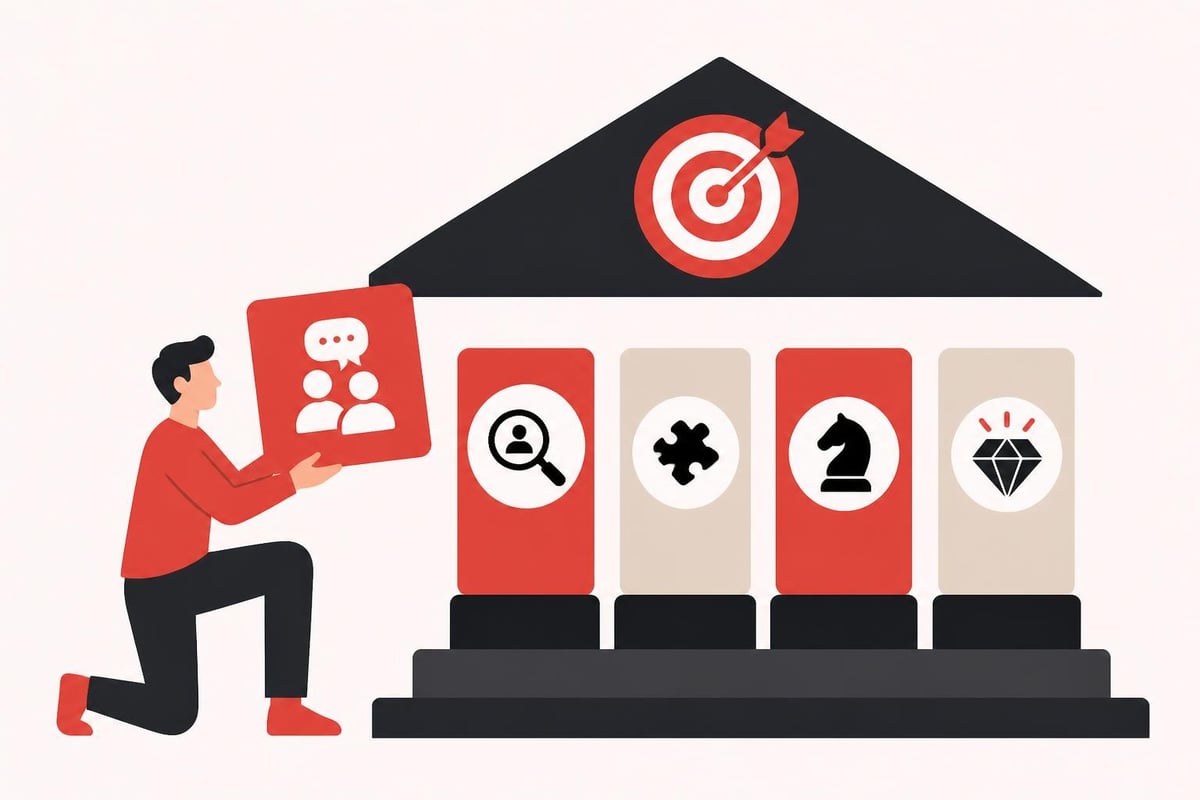
Most entrepreneurs start with limited resources, which paradoxically creates better marketers. Budget constraints force creativity, experimentation, and focus. Instead of broad campaigns, bootstrap entrepreneurs identify specific channels where their ideal customers congregate and dominate those spaces.
The Kauffman Indicators Early-Stage Entrepreneurship Report reveals that successful startups in their first two years allocate between 8% and 15% of revenue to marketing activities. This investment varies by industry and business model, but the pattern remains consistent: systematic, measured investment beats sporadic spending.
Building Your Go-to-Market Engine
The entrepreneur and marketing challenge centers on creating repeatable systems for customer acquisition. While large companies optimize existing engines, entrepreneurs must build theirs from scratch. This requires understanding your customer journey, selecting appropriate channels, and creating content that resonates.
Channel Selection Framework
Not every marketing channel works for every business. Entrepreneurs must evaluate channels based on three criteria: where their customers are, what they can afford, and what they can execute well.
| Channel Type | Best For | Resource Requirement | Time to Results |
|---|---|---|---|
| Content Marketing | B2B, complex products | Medium (consistent creation) | 6-12 months |
| Paid Search | High-intent keywords | High (ad spend) | Immediate |
| Social Media | B2C, visual products | Low to Medium (time) | 3-6 months |
| Email Marketing | Established audience | Low (automation tools) | Ongoing |
| Partnership Marketing | Complementary audiences | Medium (relationship building) | 3-9 months |
The HubSpot State of Marketing report shows that 45% of marketers report content marketing as their highest ROI channel, but this varies significantly by industry and company stage. For entrepreneurs, the highest ROI channel is often the one they can execute most consistently.
Many Swiss entrepreneurs attending Swisspreneur's community events report that focused execution in two channels outperforms scattered presence across five. This concentration allows for learning, optimization, and genuine expertise development.
Content as Your Marketing Foundation
Entrepreneur and marketing success in 2026 increasingly depends on content creation. Whether written articles, podcast episodes, video tutorials, or social media posts, content serves multiple purposes simultaneously. It attracts organic traffic, establishes expertise, nurtures leads, and supports sales conversations.
Effective content marketing follows a clear process:
- Identify customer questions and pain points through interviews and search research
- Create comprehensive answers that demonstrate expertise
- Distribute content through owned and earned channels
- Measure engagement and conversion at each stage
- Double down on what works and eliminate what doesn't
The Content Marketing Institute's B2B research indicates that 73% of successful B2B marketers have a documented content strategy. For entrepreneurs, this doesn't require a 50-page document. A simple spreadsheet tracking topics, keywords, distribution channels, and results suffices.
Tools like RankPill automate aspects of content production, helping resource-constrained founders maintain consistent publishing schedules. The platform's AI-driven approach to keyword research, article creation, and SEO optimization allows entrepreneurs to build organic visibility without hiring full content teams.
Positioning and Messaging for Entrepreneurs
The entrepreneur and marketing intersection becomes most visible in positioning work. How you describe what you do, who you serve, and why you're different determines whether prospects engage or scroll past. Poor positioning confuses markets; clear positioning cuts through noise.
Crafting Your Unique Value Proposition
Your value proposition answers three questions: What do you do? Who do you do it for? Why does it matter? Entrepreneurs often struggle with this because they're too close to their solution. They describe features when customers want outcomes.
Strong value propositions share common elements:
- Specific target audience (not "everyone")
- Clear outcome or transformation
- Differentiation from alternatives
- Emotional and rational appeal
- Memorable and repeatable phrasing
Founders discussing business models for startups often discover that their value proposition evolves as they gain market feedback. The initial hypothesis rarely survives first customer contact unchanged, and that's healthy. Marketing messaging must adapt as product-market fit crystallizes.

Testing Messages in Market
Entrepreneur and marketing alignment happens through rapid testing. Before committing to major campaigns or expensive production, smart founders test messages with small audiences. Landing pages, email subject lines, ad copy variations, and social posts all provide data about what resonates.
A/B testing isn't just for growth hackers with massive traffic. Even with 100 visitors per week, you can learn which headlines drive more clicks or which calls-to-action generate more conversions. The discipline of testing builds marketing intuition and prevents costly assumptions.
Digital Marketing Tactics for Resource-Constrained Founders
Modern entrepreneur and marketing strategies leverage digital channels because they offer targeting, measurement, and scale impossible with traditional media. But digital abundance creates paradox: too many options, too little guidance, and rapid platform changes that make today's best practice tomorrow's waste of time.
SEO for Sustainable Growth
Search engine optimization remains one of the highest-ROI marketing investments for entrepreneurs. Unlike paid advertising that stops generating results when you stop spending, SEO compounds over time. Each quality piece of content published today can attract customers for years.
Core SEO priorities for entrepreneurs:
- Keyword research aligned with customer search behavior
- Technical site optimization (speed, mobile, structure)
- High-quality content answering customer questions
- Backlink acquisition from relevant sources
- Regular monitoring and improvement
HubSpot's marketing statistics show that 61% of marketers cite improving SEO and growing organic presence as their top inbound marketing priority. For entrepreneurs competing against established players, SEO levels the playing field because it rewards relevance and quality over budget size.
Paid Acquisition and Attribution
While organic channels build over time, entrepreneur and marketing demands often require immediate results. Paid advertising on platforms like Google, LinkedIn, Facebook, and industry-specific sites can generate quick feedback and revenue while organic efforts mature.
The Intuit Small Business Advertising Trends report reveals that small businesses in 2025 allocated 34% of marketing budgets to digital advertising, with Google and Facebook receiving the largest shares. However, successful entrepreneurs base channel selection on customer behavior, not platform popularity.
| Advertising Platform | Best Use Case | Typical CPA Range | Learning Curve |
|---|---|---|---|
| Google Search | High-intent keywords | $50-$250 | Medium |
| B2B, enterprise sales | $100-$400 | Medium | |
| Facebook/Instagram | B2C, visual products | $20-$150 | Low to Medium |
| YouTube | Educational, demonstration | $30-$200 | High |
Attribution matters enormously when budgets are tight. Entrepreneurs must track which campaigns drive not just clicks or leads, but actual revenue. Multi-touch attribution models help understand the customer journey, preventing premature channel elimination based on last-click data alone.
Leveraging AI in Entrepreneur and Marketing Workflows
Artificial intelligence has transformed what's possible for solo founders and small teams. Tasks that once required agencies or specialists now run through automated systems, though human judgment remains essential for strategy and creativity.
Practical AI Applications for Marketers
Entrepreneur and marketing practitioners in 2026 use AI across multiple functions. Content ideation, first draft creation, image generation, email personalization, ad copy testing, and customer segmentation all benefit from AI assistance.
Harvard Business Review's guidance on integrating generative AI into marketing strategy emphasizes starting with clearly defined use cases rather than adopting AI broadly. Entrepreneurs should identify specific bottlenecks, test AI solutions, measure results, and scale what works.
The conversation on drawing the line on AI automation explores where automation adds value and where human judgment remains irreplaceable. Marketing automation should enhance creativity and strategic thinking, not replace it entirely.
High-value AI use cases for entrepreneur and marketing teams:
- Content outline and first draft generation
- Email subject line and copy variation testing
- Customer segmentation based on behavior patterns
- Chatbot support for common questions
- Ad creative testing and optimization
- Social media scheduling and analysis
Building Community and Word-of-Mouth
The most powerful marketing channel for entrepreneurs costs nothing but time and authenticity: community building. Customers who love your product become advocates, referring friends, writing reviews, and defending you online. This organic growth engine compounds faster than any paid channel.
Creating Remarkable Experiences
Entrepreneur and marketing excellence starts with product quality, but extends into every customer touchpoint. Onboarding sequences, support interactions, product updates, and even cancellation experiences shape perception and influence word-of-mouth.
Remarkable doesn't mean perfect. It means worth remarking about. Something unexpected, delightful, or genuinely helpful that makes customers want to share. This could be exceptional support response times, surprising product features, transparent communication, or community involvement.
The Swisspreneur podcast features numerous founders who built initial traction through community engagement rather than advertising spend. These conversations reveal patterns: consistent presence in relevant communities, genuine helpfulness without immediate sales asks, and patience as trust builds over months.
Leveraging Networks and Partnerships
Swiss entrepreneurs benefit from a tight-knit startup ecosystem where relationships matter enormously. Strategic partnerships with complementary businesses, industry associations, and local networks provide distribution channels impossible to buy with advertising.
Partnership marketing works when both sides receive clear value. Whether co-marketing webinars, bundled offerings, affiliate arrangements, or simple cross-promotion, successful partnerships start with aligned audiences and mutual benefit.
For teams looking to strengthen internal culture while exploring partnership opportunities, platforms like Innobook offer team-building experiences that foster collaboration. These shared experiences outside work environments often spark creative marketing ideas and strengthen the team bonds necessary for executing ambitious strategies.
Measuring What Matters for Entrepreneurs
Entrepreneur and marketing success depends on measurement, but entrepreneurs often track vanity metrics that feel good but don't predict business outcomes. Followers, impressions, and page views matter less than qualified leads, conversion rates, and customer lifetime value.
Building Your Marketing Dashboard
Every entrepreneur should maintain a simple dashboard tracking 5-8 key metrics that directly connect to business goals. This dashboard doesn't require expensive tools. A spreadsheet updated weekly provides enough visibility for decision-making.
Essential metrics for entrepreneur and marketing dashboards:
- Website traffic and source breakdown
- Lead generation by channel
- Lead-to-customer conversion rate
- Customer acquisition cost (CAC)
- Customer lifetime value (LTV)
- LTV:CAC ratio
- Email list growth and engagement
- Content performance (traffic, conversions)
The LTV:CAC ratio particularly matters for entrepreneurs. Venture-backed startups target ratios above 3:1, meaning each customer generates at least three times what you spent acquiring them. Bootstrap entrepreneurs often need higher ratios since growth capital is limited.
Founders exploring investment opportunities through Swisspreneur's syndicate quickly learn that investors scrutinize these metrics. Strong unit economics and clear marketing efficiency separate fundable ventures from hobby projects.
Attribution and Learning Loops
Understanding which marketing activities drive results enables smart resource allocation. Multi-channel attribution models help entrepreneurs move beyond simple last-click analysis to see how different touchpoints contribute to conversions.
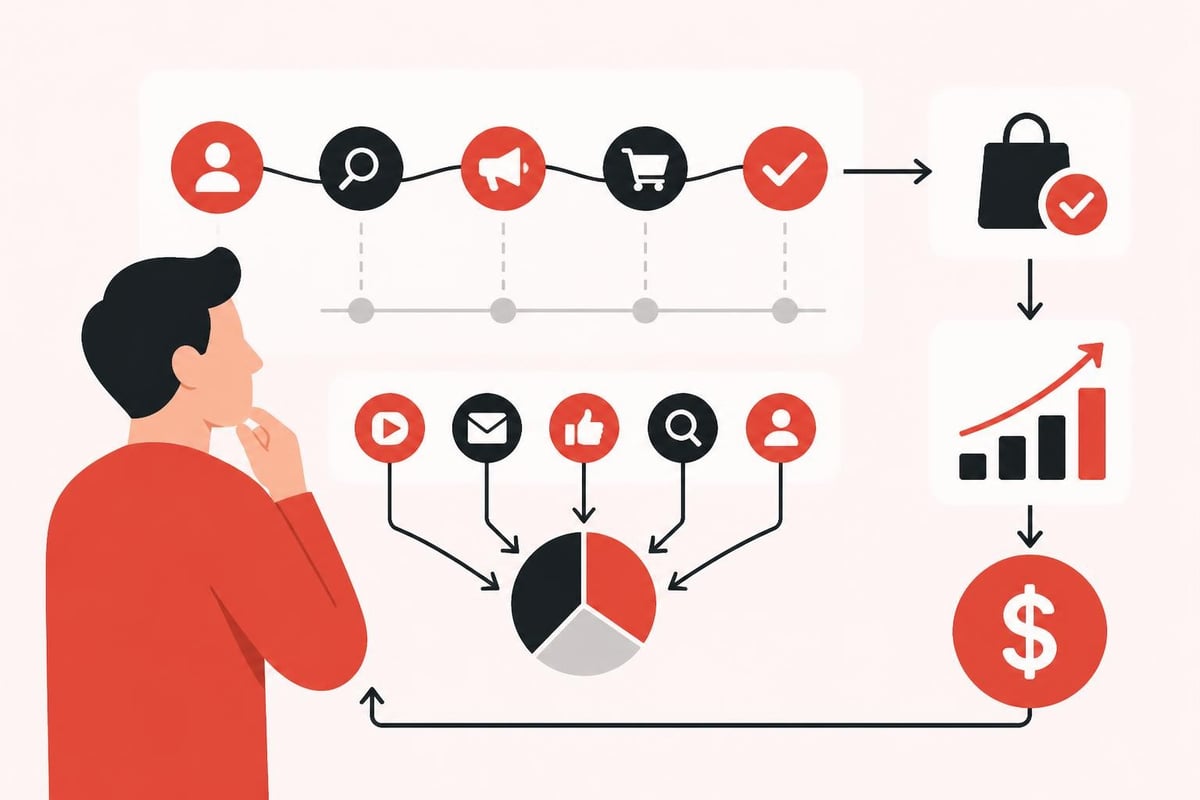
Most entrepreneurs discover that customer journeys involve multiple touchpoints. Someone might discover you through content, engage on social media, sign up for email, and convert weeks later through a direct visit. Crediting only the final touchpoint misses the full picture.
Adapting Your Marketing as You Scale
The entrepreneur and marketing strategies that work at launch differ from those needed at scale. What got you to 10 customers won't get you to 100, and what reached 100 won't reach 1,000. Successful founders continuously evolve their marketing as their business matures.
Stage-Appropriate Marketing Strategies
| Business Stage | Primary Marketing Focus | Key Channels | Team Structure |
|---|---|---|---|
| Pre-launch | Problem validation, audience building | Direct outreach, content | Founder-led |
| 0-10 customers | Product-market fit, case studies | Personal networks, communities | Founder-led |
| 10-100 customers | Repeatable acquisition, positioning | 1-2 core channels, referrals | Founder + freelancer |
| 100-1,000 customers | Channel optimization, brand building | Multi-channel, automation | Small marketing team |
Founders sharing insights at Swisspreneur masterclasses often discuss the challenge of knowing when to scale marketing investment. The answer typically ties to unit economics: when you prove that spending $X reliably generates $Y in profitable customer value, you invest more in that channel.
Hiring Your First Marketing Team Members
Eventually, successful entrepreneurs must delegate marketing to specialists. But hiring too early wastes capital, while hiring too late creates bottlenecks. The right timing typically comes when you've validated channels and need execution capacity beyond what founders can personally deliver.
First marketing hires should complement founder weaknesses. If you excel at content but struggle with paid acquisition, hire for paid media expertise. If you're technical but lack design sense, bring in creative talent. The goal is building a balanced team, not duplicating existing strengths.
Common Entrepreneur and Marketing Mistakes to Avoid
Even experienced entrepreneurs make predictable marketing mistakes. Awareness of these pitfalls helps you avoid costly detours and focus on strategies with proven ROI.
Frequent marketing mistakes by entrepreneurs:
- Trying too many channels simultaneously instead of mastering one or two
- Changing strategy too quickly before collecting meaningful data
- Neglecting measurement and attribution
- Building for everyone instead of a specific niche
- Copying competitor tactics without understanding strategy
- Underinvesting in customer retention while chasing acquisition
- Ignoring customer feedback in favor of assumptions
- Focusing on features instead of benefits and outcomes
The pattern across these mistakes is impatience and lack of focus. Entrepreneur and marketing success requires sustained effort in defined areas, not constant pivoting between shiny tactics. Discipline beats novelty.
Integrating Marketing Throughout Your Organization
As startups grow beyond founders, marketing cannot remain siloed in one person or department. Product teams need market insights to guide roadmaps. Sales teams need marketing support for lead nurturing. Customer success teams generate testimonials and case studies. Everyone contributes to the marketing engine.
Creating a Market-Oriented Culture
Entrepreneur and marketing alignment means every team member understands customer needs, competitive positioning, and value proposition. This shared understanding ensures consistent messaging across all customer touchpoints and faster response to market changes.
Regular all-hands sessions sharing customer feedback, competitive intelligence, and market trends keep everyone aligned. When engineering teams hear directly from customers, they build better products. When operations teams understand positioning, they make decisions supporting brand promises.
Resources like the discussions on entrepreneurship in the world provide broader context for Swiss founders building globally competitive ventures. Understanding international trends while executing locally creates strategic advantages.
Mastering the entrepreneur and marketing relationship determines which startups break through and which fade into obscurity. The modern founder cannot outsource strategic marketing decisions, even when hiring specialists to execute tactics. From positioning and channel selection to measurement and optimization, marketing shapes business outcomes as much as product quality. Whether you're pre-launch or scaling rapidly, Swisspreneur offers the resources, community, and expertise to sharpen your marketing strategy and accelerate growth alongside Switzerland's most ambitious founders.