

Networking Events for Startups: The Complete 2026 Guide
Building a successful startup in Switzerland's competitive ecosystem requires more than a brilliant idea and solid execution. The connections you forge, partnerships you establish, and insights you gain from fellow entrepreneurs often determine whether your venture thrives or struggles. Networking events for startups have evolved significantly by 2026, transforming from awkward mixer sessions into strategic growth platforms where founders connect with investors, discover co-founders, and unlock opportunities that accelerate their journey from concept to scale.
Why Networking Events Matter More Than Ever for Startups
The startup landscape has fundamentally shifted. Recent research from Freeman shows that networking has become the primary motivator for event attendance, surpassing even educational content. For Swiss founders, this trend matters deeply.
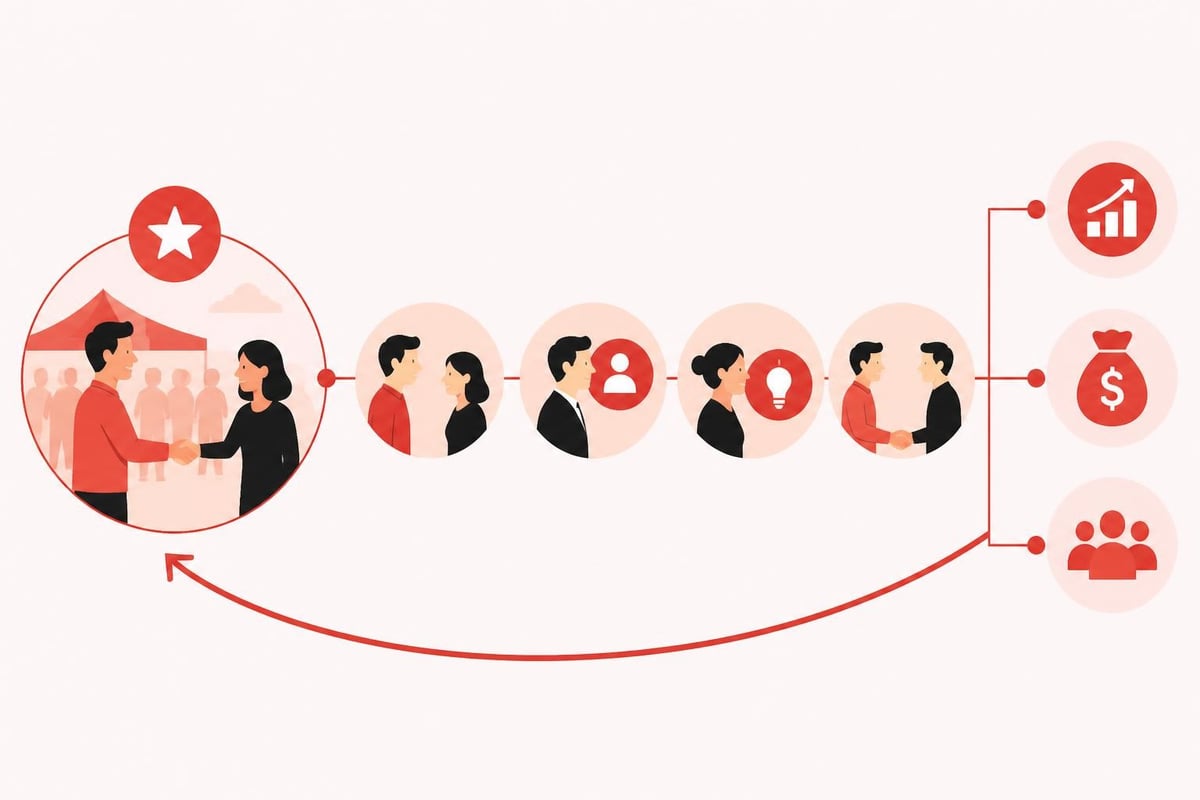
The tangible benefits of attending networking events for startups include:
- Access to potential investors actively seeking deal flow
- Introductions to experienced mentors who understand your market
- Discovery of co-founders with complementary skills
- Early customer conversations that validate product-market fit
- Partnerships with established companies seeking innovation
Consider the reality many Swiss founders face. You might have the technical expertise to build a revolutionary product, but lack the connections to secure your first enterprise client. Or perhaps you've developed promising traction but don't know which investors focus on your sector. These gaps close fastest through strategic networking.
The Swisspreneur community has witnessed countless success stories emerge from deliberate networking strategies. Founders who treat events as research opportunities-not just card-collecting exercises-consistently outperform peers who network sporadically.
Types of Networking Events Every Founder Should Consider
Not all networking events serve the same purpose. Understanding different formats helps you allocate limited time effectively.
Industry-Specific Conferences
These gatherings bring together players across your vertical-from competitors to potential partners. FinTech founders benefit from events like Money 20/20, while HealthTech entrepreneurs gain traction at digital health summits. The concentrated expertise creates unparalleled learning opportunities.
Key advantages:
- Deep domain knowledge sharing
- Investor connections with sector focus
- Competitive intelligence gathered naturally
- Partnership opportunities with complementary solutions
Pitch Competitions and Demo Days
Beyond the prize money, these events offer structured exposure to qualified investors. Even if you don't win, a compelling pitch creates follow-up conversations that lead to term sheets.
Intimate Founder Dinners
Small-group dinners, like those organized through Swisspreneur's Founders Dinner series, facilitate deeper conversations impossible in large venues. You discuss real challenges, share tactical advice, and build genuine relationships with peers navigating similar journeys.
| Event Type | Typical Size | Best For | Time Investment |
|---|---|---|---|
| Industry Conferences | 500-5,000 | Market research, partnerships | 2-3 days |
| Pitch Competitions | 50-200 | Investor exposure, publicity | Half-day |
| Founder Dinners | 8-20 | Peer learning, honest feedback | 2-3 hours |
| Speed Networking | 30-100 | Volume of connections | 1-2 hours |
| Investor Office Hours | 1-on-1 | Focused fundraising conversations | 30 minutes |
Multi-Day Retreats and Immersive Experiences
Events like Swisspreneur's ScaleUp Slopes combine networking with focused learning in memorable settings. The extended time together builds trust faster than traditional mixers ever could.
Preparing for Maximum Impact at Startup Networking Events
Walking into networking events for startups without preparation wastes everyone's time. Your pre-event strategy determines 80% of your results.
Start by researching attendees. Most organizers publish participant lists weeks in advance. Identify your top 10 target connections-specific people whose expertise, capital, or network could meaningfully advance your startup. Stripe's networking guide emphasizes this targeted approach over random mingling.
Your preparation checklist should include:
- Reviewing LinkedIn profiles of key attendees
- Preparing 3-4 specific questions for each target connection
- Updating your own LinkedIn with recent milestones
- Crafting a concise, compelling introduction (not a pitch)
- Setting clear objectives: introductions, customer conversations, investor meetings
Consider how you'll share contact information efficiently. Modern founders increasingly use digital business cards from services like Spreadly that include video backgrounds, scheduling links, and product demos-far more engaging than traditional paper cards that get lost or thrown away. These digital solutions let you update information instantly, ensuring everyone you meet has your current details.
The physical logistics matter too. Charge your phone fully. Bring portable battery packs. Wear something memorable but professional-founders remember "the person in the Swiss flag sweater" more easily than another black blazer.
Crafting Your Founder Story
Your introduction shouldn't be a sales pitch. Nobody wants to hear your full business plan in a hallway conversation. Instead, focus on the problem you're solving and why it matters to you personally.
Harvard Business Review's research on networking conversations confirms that authentic stories create stronger connections than rehearsed elevator pitches. Share the customer pain point you witnessed, the "aha" moment that sparked your startup, or the personal experience that drives your mission.
Maximizing Value During the Event Itself
Once you arrive, resist the temptation to cling to familiar faces. You didn't invest time and money to talk only with people you already know.
Effective event navigation strategies:
- Arrive early when the room is less crowded and intimidating
- Position yourself near refreshment stations where people naturally pause
- Join conversations already in progress rather than waiting for perfect openings
- Introduce people to each other, creating value beyond your own connections
- Take brief notes after conversations (names, key details, follow-up actions)
Quality trumps quantity in every scenario. Three meaningful conversations create more value than twenty rushed introductions. When you meet someone interesting, go deeper instead of scanning the room for the next person.

Speed networking formats deserve special attention. These structured rotations ensure you meet numerous people efficiently. Cvent's guide to conference networking outlines best practices for both attending and organizing speed sessions. Prepare questions that reveal whether someone is worth deeper follow-up: "What's your biggest challenge right now?" often yields more insight than "What do you do?"
For Swiss founders attending international events, your location carries unique advantages. Switzerland's reputation for quality, precision, and innovation opens doors. Leading with "We're building [solution] from Switzerland" frequently sparks curiosity and positive associations.
Following Up Strategically After Networking Events
Your event ROI materializes entirely in the follow-up. The connections you make mean nothing without deliberate next steps.
The 24-hour rule matters immensely: Contact new connections within one day while conversations remain fresh in their minds. Your message should reference specific discussion points that jog their memory.
Rather than generic "Nice meeting you" notes, try this formula:
- Remind them where you met and what you discussed
- Share the resource, introduction, or insight you promised
- Propose a concrete next step (call, coffee, introduction)
- Make responding easy with specific options
Example: "Stefan, enjoyed our conversation about scaling B2B sales teams at the Zurich Founder Dinner. As mentioned, here's the sales masterclass resource our community has found helpful. Would love to continue our discussion about your enterprise pivot-are you free for a 20-minute call next Tuesday or Thursday?"
| Follow-up Type | Timing | Purpose | Response Rate |
|---|---|---|---|
| Thank-you email | Within 24 hours | Reinforce connection | 65-75% |
| Value-add share | 3-5 days | Share promised resource | 70-80% |
| Meeting request | 1 week | Schedule deeper conversation | 40-50% |
| Monthly check-in | 30 days | Maintain relationship | 30-40% |
Building Long-Term Relationships Beyond Single Events
The founders who gain most from networking events for startups view each event as one touchpoint in ongoing relationships. They follow up consistently without being pushy, share relevant content when it helps connections, and offer value before asking for favors.
Consider creating a simple CRM system (even a spreadsheet works) tracking your networking contacts, conversation highlights, promised follow-ups, and relationship status. When you attend another event six months later, reviewing these notes ensures smooth continuity.
The entrepreneurship lessons shared by successful founders consistently emphasize relationship-building as a long game. Your investor connection today might not write a check for two years-but maintaining that relationship positions you perfectly when the timing aligns.
Measuring Success Beyond Business Cards Collected
How do you know if attending networking events for startups actually moves your business forward? BizBash's framework for measuring networking event success provides helpful metrics beyond simple attendance.
Quantitative metrics worth tracking:
- Number of qualified investor conversations initiated
- Partnership discussions leading to formal proposals
- Customer discovery interviews conducted
- Introductions to target contacts received
- Follow-up meetings scheduled within two weeks
Qualitative indicators include:
- Depth of conversations versus surface-level exchanges
- Insights gained about market trends or competitor moves
- Feedback on your pitch or positioning
- Relationship quality with new connections
- Invitations to future exclusive events
Smart founders treat events as experiments. They track which types of networking events for startups yield the highest ROI for their stage, sector, and goals. An early-stage consumer app might prioritize pitch competitions and accelerator demo days, while a growth-stage B2B SaaS company benefits more from industry conferences and executive dinners.
According to Bizzabo's Event Networking Report, attendees now expect measurable outcomes from their networking time. Event organizers respond by creating more structured opportunities for qualified connections rather than leaving networking to chance.

Common Networking Mistakes Swiss Founders Should Avoid
Even experienced entrepreneurs fall into predictable traps that diminish their networking effectiveness.
The biggest mistake? Treating networking as a sales opportunity. Nobody attends events hoping to be sold to. The moment you launch into pitch mode, you've lost the connection. Entrepreneur's guide to startup networking emphasizes leading with curiosity rather than pitching.
Other frequent missteps include:
- Focusing only on "important" people while ignoring peers who could become valuable connections
- Failing to listen because you're planning what to say next
- Collecting contacts without any follow-up system
- Attending events without clear objectives or target connections
- Staying in your comfort zone talking only with familiar contacts
- Drinking too much and damaging your professional impression
Swiss founders sometimes struggle with self-promotion due to cultural modesty norms. Remember that sharing your work isn't bragging-it's helping others understand how they might benefit from knowing you. Frame your startup's achievements as problem-solving rather than boasting.
The opposite mistake also occurs: over-apologizing or downplaying your progress. Investors and partners respect confidence balanced with humility. Share your traction honestly without unnecessary qualifiers.
Hosting Your Own Networking Events
As your startup grows, consider organizing your own networking events for startups in your space. This strategy positions you as a community leader while creating targeted connections.
Small-scale events work beautifully. Invite 10-12 founders facing similar challenges for dinner. Host office hours where early-stage entrepreneurs can ask questions. Organize skill-sharing workshops that bring together complementary expertise.
Benefits of hosting include:
- Control over attendee composition and quality
- Positioning as a connector and community builder
- Deeper relationships formed through repeated gatherings
- First access to emerging talent, partnerships, and trends
The business coaching insights from experienced founders confirm that giving back to the community through hosting creates unexpected opportunities. Your willingness to facilitate connections for others builds social capital that returns multiplied.
Leveraging Virtual and Hybrid Networking Opportunities
While in-person events deliver unmatched relationship depth, virtual networking events for startups serve specific purposes effectively.
Virtual events eliminate geographic barriers, letting Swiss founders connect with Silicon Valley investors or Asian market experts without travel costs. They work particularly well for structured formats like expert panels, AMA sessions, or topic-specific roundtables.
Hybrid events combine both approaches. You might attend a conference in-person while accessing extended programming virtually, or participate locally while connecting with global attendees online. This flexibility maximizes accessibility while preserving high-value face-to-face time.
Virtual networking success factors:
- Turn your camera on and use proper lighting
- Prepare your background professionally (or use virtual backgrounds from tools like Spreadly)
- Test audio quality beforehand
- Engage actively in chat and breakout rooms
- Follow up even more promptly since virtual connections fade faster
The pandemic permanently shifted networking norms. Requesting a video call instead of coffee no longer seems impersonal-it's often preferable for busy founders managing packed schedules.
Sector-Specific Networking Strategies for Swiss Startups
Different industries require tailored approaches to networking events for startups. What works for a consumer app founder differs dramatically from a medtech entrepreneur's needs.
FinTech and Financial Services
Swiss FinTech founders benefit from the country's strong financial sector reputation. Target events where traditional banks, payment processors, and financial institutions seek innovation partners. Regulatory knowledge matters immensely-demonstrating understanding of Swiss FINMA requirements immediately elevates your credibility.
HealthTech and Life Sciences
The Swiss life sciences cluster around Basel and Zurich creates unique opportunities. University spinout events, hospital innovation challenges, and pharma partnering conferences offer direct access to decision-makers. Patient privacy and regulatory compliance become conversation centerpieces.
Enterprise SaaS and B2B Technology
These founders gain most from industry vertical conferences where potential customers gather. If you're building HR technology, attend HR tech conferences. Supply chain software? Target logistics and operations events. The concentrated buyer presence justifies higher event costs.
Building Your Personal Networking Strategy
Generic advice only goes so far. Your optimal networking strategy depends on your startup's stage, sector, and specific goals right now.
Early-stage founders (pre-seed, seed) should prioritize:
- Accelerator and incubator events for peer learning
- Pitch competitions for exposure and feedback
- Investor office hours and angel network meetings
- Co-founder dating events if still building your team
Growth-stage founders (Series A and beyond) benefit more from:
- Industry leadership conferences for market positioning
- Enterprise customer events for partnership development
- Executive peer groups and CEO forums
- International expansion-focused gatherings
Time remains every founder's scarcest resource. You can't attend everything. Choose events strategically based on who attends, not just the programming. A mediocre agenda with your target investors beats an excellent speaker lineup with the wrong audience.
The Swisspreneur community events calendar specifically curates gatherings where Swiss founders connect with relevant investors, mentors, and partners-eliminating the filtering work.
Making Networking a Sustainable Habit
One-off event attendance generates limited value. Consistent participation in the right networking events for startups compounds into relationship networks that accelerate your growth trajectory.
Block calendar time monthly for networking activities. This might include attending two events, scheduling five follow-up coffees, and making three warm introductions for others. Regular rhythm prevents networking from becoming a desperate activity you only pursue when fundraising.
Create systems that make networking sustainable. Use contact management tools that remind you to check in with key relationships quarterly. Set Google Alerts for your connections' companies so you can congratulate them on milestones. Share relevant articles with specific people rather than broadcasting to everyone.
The most connected founders in Switzerland's startup ecosystem earned their networks through years of generous, consistent relationship building-not transactional connection-collecting. They helped others without expectation of immediate return, and that generosity created networks that opened doors when they needed them.
Strategic networking transforms how quickly your startup accesses opportunities, capital, and expertise in Switzerland's competitive ecosystem. By approaching networking events for startups with clear objectives, genuine curiosity, and consistent follow-up, you build the relationship foundation that accelerates every aspect of growth. Whether you're seeking your first customers, raising capital, or scaling across Europe, the connections you forge at the right events unlock doors that remain closed to isolated founders. Swisspreneur brings together Switzerland's entrepreneurial community through carefully curated events, masterclasses, and resources designed to help you build the relationships that matter most for your startup's success.