

Startup Lessons: What Early Founders Should Know
The most useful startup lessons are simple to state and hard to practice: talk to customers before you build, hire slowly, watch your cash weekly, and treat fundraising as an ongoing process rather than a one-time event. Early founders who internalize these habits make fewer expensive mistakes and reach traction faster. This article covers the lessons that matter most in the first two to three years, with a focus on founders building a GmbH or AG in Switzerland.
Talk to Customers Before You Build Anything Substantial
The first lesson is to validate demand with real people before investing months in a product. Founders who skip this step often discover that the problem they solved matters to nobody who will pay for it.
The U.S. Small Business Administration advises that market research should assess demand, market size, economic indicators, customer demographics, and competitors. It also identifies surveys, questionnaires, focus groups, and in-depth interviews as methods of direct research. For a pre-seed company, interviews are often a cheap and revealing option.
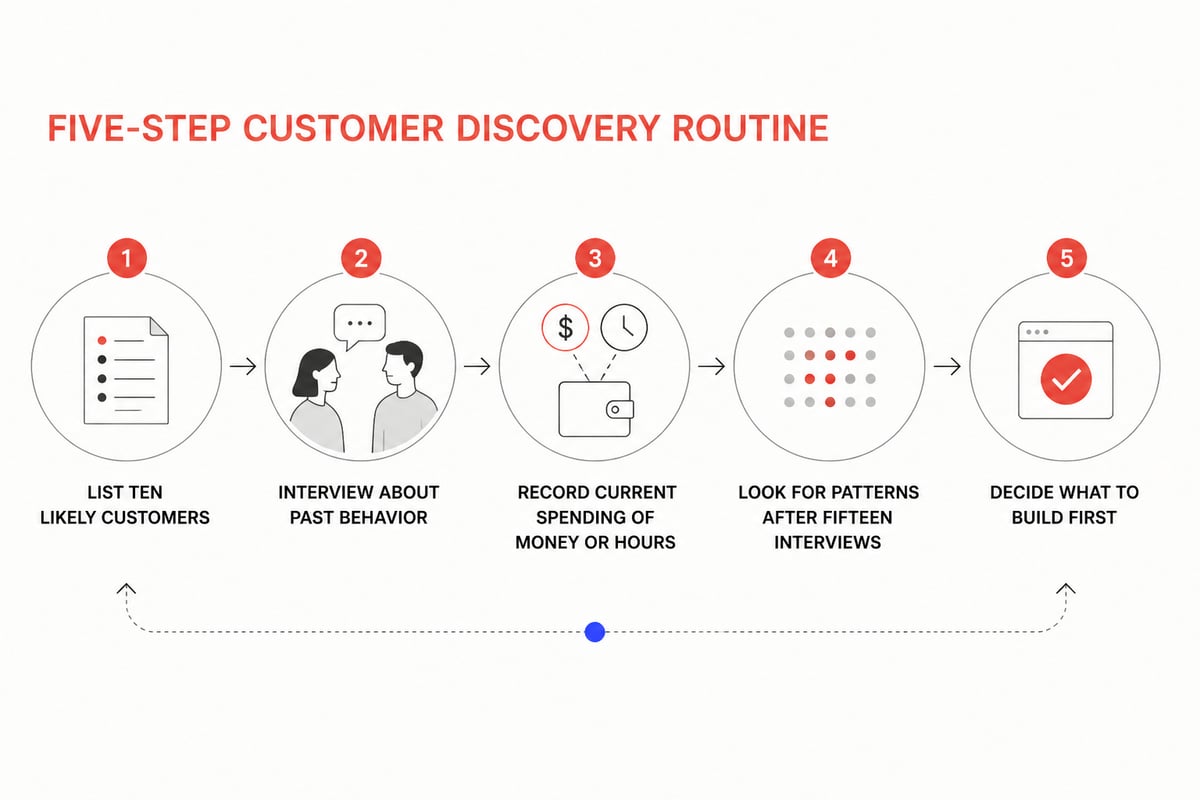
A practical interview routine looks like this:
- List the ten people most likely to have the problem you want to solve.
- Ask about their last experience with that problem, not whether they would use your idea.
- Note what they currently pay for, in money or in hours.
- Look for patterns after at least fifteen conversations.
- Only then decide what to build first.
Swiss founders face a specific constraint here. The home market is small, and a product that works in Zurich may need adaptation for German, French and Italian-speaking regions. Testing across language regions early prevents surprises later. For a structured approach, Swisspreneur's guide to the dos and don'ts of startup idea testing is a useful companion.
Ship a Small Product and Learn From Real Use
Launching a narrow first version beats polishing a broad one. Y Combinator's advice for early-stage founders emphasizes building for users, gathering feedback and iterating, which is only possible once something is in people's hands.
The temptation to wait is strong. Founders tell themselves that one more feature will make the launch worthwhile. In practice, each added feature delays the moment you learn whether your core assumption holds.
Consider these signals that you are over-building:
- You cannot describe the product in one sentence.
- No paying customer has asked for the features you are adding.
- You are refining design while sales conversations have not started.
- Your launch date has moved more than twice.
A small release also lowers the emotional cost of being wrong. If the first version fails, you have lost weeks rather than a year. That makes it easier to change direction, which is often the most valuable skill an early founder can develop.
Hire Slowly and Build the Team Culture on Purpose
Early hires set the pattern for everything that follows, so the right pace is slower than most founders expect. A weak early hire costs more than an empty seat: it lowers the bar for the next person and absorbs management attention you cannot spare.
Look for people who tolerate ambiguity, communicate directly and care about the customer problem. Skills can be taught; judgment under uncertainty is harder to teach. Swiss founders also need to consider employment law, notice periods and social insurance contributions before making an offer, so involve a lawyer or accountant before the first contract is signed.
Culture is not a poster on a wall. It is the set of behaviors you reward and tolerate when no one is watching. Swisspreneur's resource on how to build a culture in a Swiss startup walks through how to define values early, and its piece on four things you need to know about successful startup teams covers team composition in more depth.
Cofounder alignment deserves its own attention. Agree in writing on roles, equity, vesting and what happens if one founder leaves. These conversations feel awkward at the start and are far cheaper than disputes at the first funding round.
Track a Few Metrics Weekly and Know Your Cash Position
Early-stage companies should watch a small set of numbers every week rather than a large dashboard once a quarter. The right set depends on your model, but most founders need at least these:
- Cash on hand and monthly burn, which together give you runway in months
- Revenue growth, measured week over week or month over month
- Customer acquisition cost, compared with what a customer pays over time
- Retention or churn, showing whether people stay once they sign up
- Pipeline conversion, showing where prospects drop out of your sales process
Runway is the number that ends companies. If you have six months of cash and fundraising takes three, you have a narrow margin for error. Swisspreneur's overview of finance essentials for startups is a good place to build the habit, and the podcast episode on financial advice for early-stage startups goes through common pitfalls.
Business models also shape which metrics matter most. If you are still deciding how to charge, the overview of business models for startups lays out the main options and their trade-offs.
Keep Clean Records From the First Invoice
Good bookkeeping is a startup lesson that feels dull until a due diligence request arrives. Investors, banks and tax authorities all expect records that clearly show income and expenses.
The IRS notes that a business may choose any recordkeeping system that clearly shows income and expenses, and that supporting documents include invoices, receipts and paid bills. It also states that businesses must keep employment tax records for at least four years. These are U.S. rules, and Swiss requirements differ, so confirm your own retention obligations with a Swiss accountant. The underlying habit transfers well: record every transaction, keep the supporting document, and reconcile monthly.
A useful reference for what to store is the IRS explanation of what kinds of business records to keep, which covers receipts, invoices and payroll records. Use it as a checklist, then adapt it to Swiss practice.
Legal housekeeping belongs in the same routine. Keep your cap table current, store signed agreements in one place, and document IP assignment from every founder and contractor. The podcast on legal advice for early-stage startups covers the issues that most often surface during a first round.

Treat Fundraising as a Continuous Process
Fundraising works best when it is an ongoing relationship-building effort, not a sprint that starts when cash runs low. Investors prefer to watch a founder deliver on small promises over several months before writing a cheque.
Practical habits include:
- Send a short monthly update to prospective investors, even before you raise.
- Keep a living list of target investors with notes on past conversations.
- Prepare a data room early so diligence does not stall momentum.
- Be specific about how much you need and what it buys in milestones.
For Swiss startups at the pre-seed and seed stage, the Swisspreneur Syndicate offers a structured route. Founders pay nothing, and Swisspreneur takes a 15% carried interest on investor profits. The platform has facilitated over CHF 3M in investments through the Syndicate. The Syndicate fits best once you have a Swiss legal entity such as a GmbH or AG and early traction.
On the investor side, the platform offers a way for individual investors in Switzerland to back early-stage companies, and its database holds 1,000+ investors to help founders find the right match.
Preparation matters more than any single pitch. Read how others have structured their rounds in the story of a syndicate success startup before you design your own.
Learn to Sell, Because Nobody Else Will at the Start
Founders are the first and best salespeople, and the habit of selling should start well before the product is finished. Early sales calls teach you which objections recur, which customers get value fastest and what price the market will tolerate.
Pricing deserves deliberate attention. Underpricing signals low quality and starves the business of margin; overpricing without proof of value stalls conversations.
Marketing also begins earlier than most founders plan. Content, community presence and a consistent point of view take months to compound. For B2B founders, the podcast on a B2B marketing framework for startups offers a clear structure to start from. Founders in regulated sectors may also benefit from specialist support; agencies such as MedTech Momentum focus on marketing for medical technology companies, which have different buyer journeys and compliance constraints than general software.
Build Peer Relationships Before You Need Them
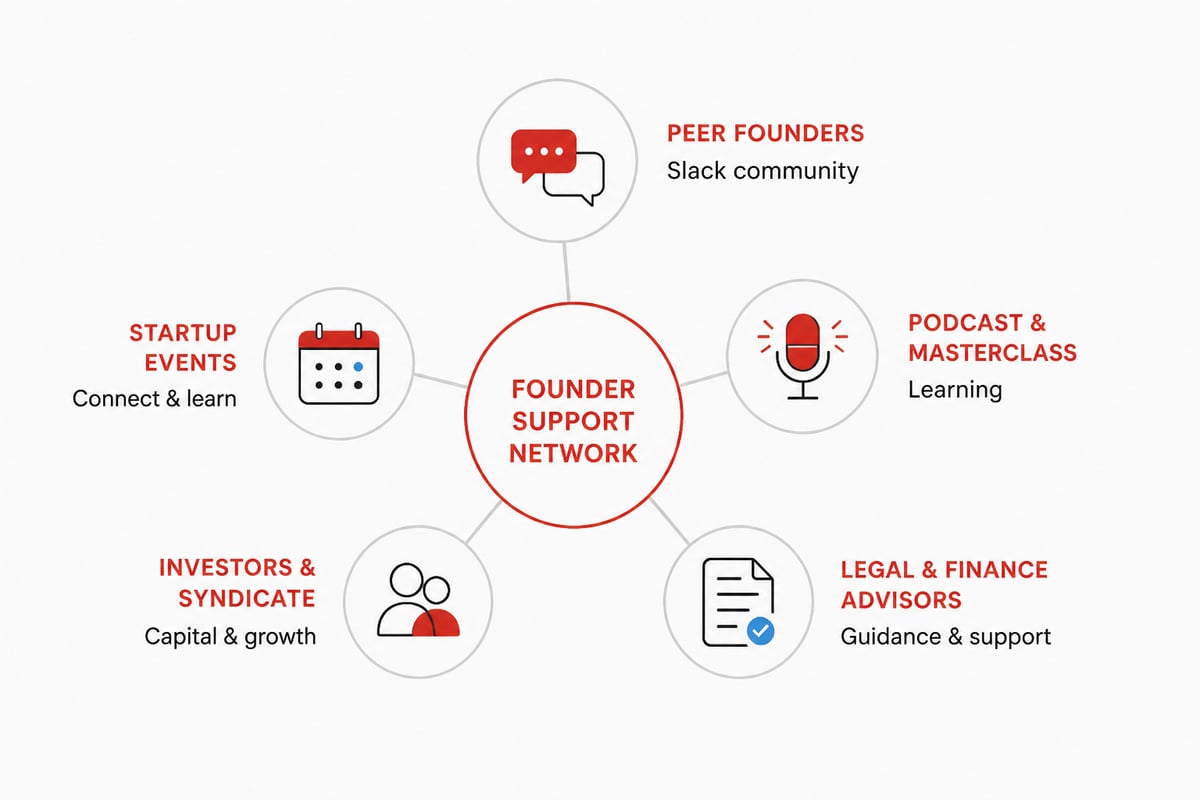
Founders who invest in a peer network early solve problems faster and avoid repeating mistakes others have already paid for. Loneliness is a real risk in the early years, and a group of people who understand the same pressures is a practical asset, not a luxury.
In Switzerland, the ecosystem is compact, which helps. Introductions travel quickly, and a good reputation spreads. Swisspreneur's Slack channel connects over 700 founders, the podcast library includes 550+ freely available episodes, and the platform runs 10+ startup events per year with an overall event NPS score of 84. Founders can also access 150+ minutes of free masterclass content.
Choose where to spend your time deliberately. The guide to networking events for startups can help you decide which formats are worth your calendar, and the write-up on building a startup community first shows how community can come before product in some cases.
Mentors deserve a similar approach. Ask for specific advice on specific decisions rather than general guidance, and report back on what you did with it. That habit turns a single conversation into a lasting relationship.
Protect Your Own Energy and Judgment
A founder's judgment degrades under chronic stress, and the company inherits those decisions. Sleep, exercise and recovery are not indulgences; they protect the quality of choices that determine whether the business survives. Coaches who work specifically on resilience and leadership, such as The Father Forge, approach this from a fitness and mindset angle, which suits founders who also carry family responsibilities.
Set a few non-negotiable routines: a fixed weekly rest block, a regular check-in with a trusted peer, and a clear boundary on when you stop reading messages. Founders often resist these because the work feels urgent, but burnout is a far greater threat to progress than a missed evening of email.
The role itself also changes quickly. In the first year you do everything; by the third you are expected to hire, delegate and communicate a vision. Swisspreneur's piece on your role as startup CEO and the episode on your jobs as a startup CEO both describe how that shift plays out.
Expect Setbacks and Plan for Them
Every early-stage company hits a stretch where growth stalls, a key hire leaves or a large customer churns. The lesson is not to avoid these events, since you cannot, but to prepare for them with cash reserves, clear communication and a habit of reviewing decisions honestly.
A short list of preparations helps:
- Keep at least six months of runway when possible, and treat anything below three months as an emergency.
- Write down your assumptions and review them quarterly, so you notice when one has failed.
- Tell your team and investors bad news early, with a plan attached.
- Keep a record of decisions and their reasoning, so you can learn from them later.
External shocks also test resilience. Swisspreneur's article on how a startup will survive a market crash offers a template for stress-testing your plans, and the overview of the startup journey places these low points in context so they feel less like personal failure and more like part of the path.
Founders who treat each setback as data, rather than a verdict, tend to adapt faster. That mindset is among the most durable startup lessons you can build, and it compounds with every cycle of testing and revision.
Your next step is to schedule five customer interviews this week and write down what you learn before you change anything in your product. If you are a Swiss founder with a GmbH or AG and early traction, you can explore Swisspreneur Investments for startups to see how the Syndicate approaches pre-seed and seed rounds. Investors who want to back early-stage Swiss companies with small tickets can use the Swisspreneur investor page to sign up for deals and follow new opportunities as they open.