

Start Up New: Your Guide to Launching in Switzerland
The decision to start up new ventures requires courage, planning, and a deep understanding of the entrepreneurial landscape. In Switzerland's thriving startup ecosystem, founders face unique opportunities and challenges that can make or break their early-stage companies. Whether you're a first-time entrepreneur or a serial founder, knowing how to navigate the critical early stages will significantly impact your chances of building a sustainable business. This guide explores the essential steps, common obstacles, and proven strategies for those ready to start up new enterprises in 2026.
Understanding the Commitment Before You Start Up New
Starting a new business demands far more than a great idea. The reality is that most entrepreneurs underestimate the time, energy, and resources required to transform a concept into a viable company.
Before you start up new business operations, assess your personal readiness. Consider whether you can handle the financial uncertainty, long working hours, and emotional rollercoaster that characterizes the startup journey. Many founders work 60-80 hours per week during the first year, often while managing existing job responsibilities or family commitments.
Financial preparedness is equally critical:
- Calculate your personal runway (how long you can survive without income)
- Determine minimum viable funding needed to reach your first milestone
- Build an emergency fund covering at least six months of expenses
- Plan for unexpected costs that inevitably arise
The Swiss startup landscape offers particular advantages for those ready to commit. Access to high-quality talent, stable infrastructure, and proximity to major European markets create favorable conditions. However, higher operating costs and regulatory complexity require careful planning from day one.

Market Research and Validation Fundamentals
One of the ten common obstacles new entrepreneurs face is insufficient market research. Before investing significant time and capital, validate that real demand exists for your solution.
Identifying Your Target Market
Start with specific customer segments rather than broad market categories. Who experiences the problem you're solving most acutely? What demographics, behaviors, or characteristics define them?
Create detailed customer personas that include:
- Pain points and frustrations
- Current solutions they use
- Buying behaviors and decision criteria
- Budget constraints and willingness to pay
- Where they seek information and recommendations
Testing Your Assumptions
Every business model contains assumptions that need validation. Which assumptions, if wrong, would doom your venture? Test these risky assumptions first through low-cost experiments.
Conduct customer interviews with at least 30-50 potential users. Ask open-ended questions about their current challenges rather than pitching your solution. Watch for patterns in their responses that either confirm or contradict your hypotheses.
Build a minimum viable product (MVP) that tests your core value proposition with minimal features. The goal isn't perfection but learning whether customers will actually use and pay for what you're building. Swiss entrepreneurs can leverage the country's concentration of early adopters in major cities like Zurich, Basel, and Geneva to gather rapid feedback.
Building Your Business Foundation
When you start up new companies, the legal and operational infrastructure you establish shapes everything that follows. Rushing through these foundational decisions creates problems that become increasingly expensive to fix.
Choosing the Right Legal Structure
Switzerland offers several business structures, each with distinct implications for taxes, liability, and administrative burden:
| Structure | Best For | Key Advantages | Main Drawbacks |
|---|---|---|---|
| Sole Proprietorship | Solo founders, service businesses | Simple setup, low costs | Unlimited personal liability |
| GmbH (LLC) | Small teams, moderate growth | Limited liability, flexibility | CHF 20,000 minimum capital |
| AG (Corporation) | High-growth startups, investor funding | Professional image, easy equity transfers | CHF 100,000 minimum capital, complex governance |
| Cooperative | Community-focused ventures | Democratic structure, member ownership | Complex decision-making |
Most tech startups aiming for venture funding establish an AG structure despite higher initial costs. The ability to issue different share classes and attract institutional investors outweighs the administrative complexity. If you're exploring how to navigate founder relationships, the legal structure impacts how you'll formalize equity splits and decision-making authority.
Crafting Your Business Plan
While lean methodologies have reduced emphasis on lengthy business plans, a well-structured plan remains valuable for securing funding and guiding strategic decisions. Microsoft's comprehensive guide to starting a business emphasizes the importance of this foundational document.
Your business plan should address:
- Executive summary highlighting your value proposition
- Market analysis demonstrating opportunity size
- Competitive landscape and differentiation
- Business model and revenue streams
- Marketing and sales strategy
- Operations plan and key milestones
- Financial projections for three years
- Team composition and roles
Keep your plan concise but comprehensive. Investors and partners want to see you've thought through key challenges without getting lost in unnecessary detail.
Managing Cash Flow and Financial Planning
Among the biggest challenges new business owners face, cash flow management tops the list. Profitable companies can still fail if they run out of cash before receiving customer payments.
Start by building detailed financial models that project monthly cash inflows and outflows. Identify periods where you'll face cash crunches and plan accordingly. Conservative revenue projections combined with realistic expense estimates provide a clearer picture than optimistic scenarios.
Critical financial practices when you start up new:
- Separate business and personal finances immediately
- Track every expense from day one
- Invoice promptly and follow up on late payments
- Negotiate favorable payment terms with suppliers
- Maintain a cash reserve for emergencies
Funding Your Startup
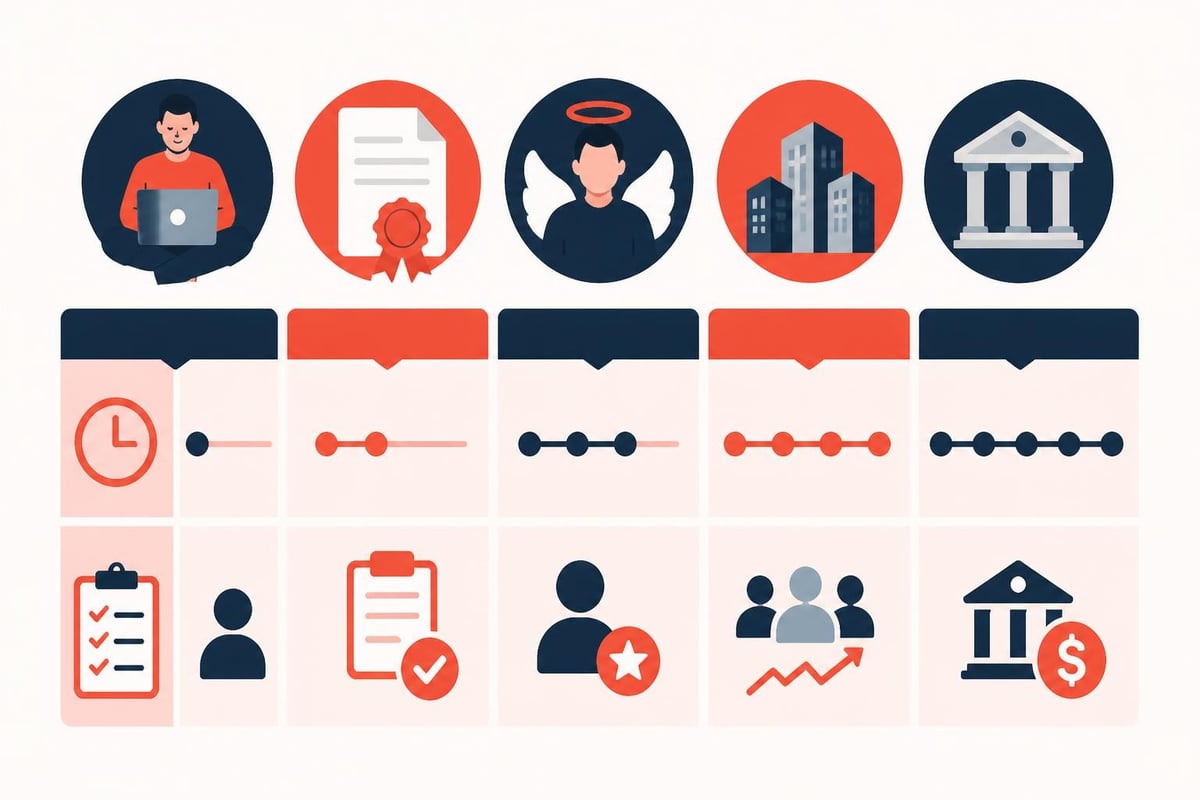
Consider multiple funding sources rather than relying on a single approach. Bootstrapping through personal savings and early revenue keeps you in control but limits growth speed. Angel investors and venture capital accelerate expansion but dilute ownership and influence.
Swiss entrepreneurs can access various funding mechanisms:
- Government grants and subsidies (Innosuisse, regional programs)
- Angel investor networks and family offices
- Venture capital firms focused on Swiss startups
- Bank loans and credit lines
- Crowdfunding platforms for specific sectors
The Swisspreneur syndicate connects founders with experienced investors who understand the local ecosystem. Building relationships with potential investors before you desperately need funding improves your negotiating position and access to strategic advice.
Building Your Team and Culture
No entrepreneur succeeds alone. The team you assemble in the early stages determines your execution capability and company culture for years to come.
Finding Co-Founders and Early Employees
If you're considering a co-founder partnership, choose carefully. Complementary skills matter less than shared values, work ethic, and communication styles. Many startup failures stem from co-founder conflicts that could have been avoided through better alignment upfront.
Look for team members who bring:
- Skills that complement rather than duplicate yours
- Demonstrated ability to execute in uncertainty
- Passion for your mission beyond just compensation
- Cultural fit with your working style
- Networks that open doors you can't access alone
Establishing Company Culture Early
Culture isn't ping-pong tables and free snacks. It's the behaviors you reward, the decisions you make under pressure, and the standards you maintain when no one's watching.
Define your core values explicitly and hire against them. When you start up new teams, early employees set precedents that attract or repel future talent. One wrong hire in a five-person company destroys 20% of your culture.
| Cultural Element | Questions to Address | Impact on Success |
|---|---|---|
| Communication | How do we share information and make decisions? | High - affects speed and alignment |
| Work-life integration | What boundaries do we respect? | High - impacts retention and productivity |
| Customer focus | How do we prioritize user needs vs. business metrics? | Critical - shapes product decisions |
| Innovation | How do we encourage experimentation and handle failure? | Medium - influences adaptability |
| Transparency | What information do we share with the team? | Medium - affects trust and engagement |
The tools entrepreneurs choose for communication, project management, and documentation also reinforce cultural norms. Remote-friendly tools signal flexibility, while office-centric approaches indicate different priorities.
Marketing and Customer Acquisition Strategies
Building a great product means nothing if customers can't find you. Marketing deserves as much attention as product development when you start up new ventures.
Developing Your Go-to-Market Strategy
Your go-to-market approach should align with how your target customers discover and evaluate solutions. B2B software requires different tactics than consumer products or professional services.
Effective go-to-market strategies combine multiple channels:
- Content marketing: Create valuable resources that attract your ideal customers through search and social sharing
- Direct outreach: Personal connections and warm introductions to decision-makers
- Partnerships: Strategic alliances that give you access to established customer bases
- Community building: Engaging with your audience where they already gather
- Paid acquisition: Targeted advertising once you've validated channel economics
Building Brand Awareness in Switzerland
Switzerland's multilingual, multicultural market requires localized approaches. A campaign that works in Zurich might fall flat in Geneva or Lugano. Consider linguistic and cultural differences across cantons when planning your marketing.
Leverage the Swiss startup community through entrepreneur events and networking opportunities. The concentrated ecosystem means your early advocates can become powerful amplifiers. Participating in accelerator programs, demo days, and industry conferences builds credibility while expanding your network.
Track marketing metrics rigorously from the start:
- Customer acquisition cost (CAC) by channel
- Lifetime value (LTV) of different customer segments
- Conversion rates at each funnel stage
- Time from first contact to closed deal
- Channel ROI and payback periods
These metrics reveal which activities generate sustainable growth versus vanity metrics that look impressive but don't drive business results.
Navigating Legal and Regulatory Requirements
Swiss business regulations protect consumers and maintain market fairness, but compliance requires attention to detail. Understanding common challenges when developing your first business helps you avoid costly mistakes.
Essential Legal Considerations
Register your business with the appropriate cantonal authorities before conducting commercial activities. Obtain necessary permits and licenses specific to your industry. Switzerland's federal structure means regulations vary by canton, requiring location-specific research.
Key compliance areas include:
- Tax registration (VAT, corporate tax, social security)
- Employment law and worker protections
- Data protection and privacy (GDPR compliance for EU operations)
- Intellectual property protection (trademarks, patents)
- Industry-specific regulations (finance, healthcare, food service)
Invest in quality legal counsel early. The cost of proper contracts and compliance frameworks is minimal compared to litigation, regulatory fines, or unwinding poorly structured agreements. A founders' contract that clearly defines roles, equity, and decision-making authority prevents conflicts that destroy promising startups.
Protecting Your Intellectual Property
For tech startups and innovative businesses, intellectual property often represents your primary competitive advantage. File trademark applications before launching publicly to secure your brand. Consider patent protection for truly novel inventions, though the cost-benefit calculation favors trade secrets for many software innovations.
Ensure all contractors and employees sign agreements assigning IP rights to the company. Without these documents, you might not own the code, designs, or content they create.
Measuring Progress and Iterating
When you start up new businesses, the path forward is never linear. Success requires constantly measuring results, learning from data, and adjusting your approach.
Defining Your Key Metrics
Identify the 3-5 metrics that truly indicate business health. These vary by business model but typically include measures of customer acquisition, engagement, retention, and unit economics.
For SaaS businesses:
- Monthly recurring revenue (MRR)
- Customer churn rate
- Customer lifetime value to acquisition cost ratio
- Net revenue retention
- Activation rate (free to paid conversion)
For marketplace businesses:
- Gross merchandise value (GMV)
- Take rate (percentage revenue)
- Liquidity (supply-demand balance)
- Repeat usage rate
- Transaction frequency
Track these metrics weekly or monthly depending on your business cycle. Share them transparently with your team so everyone understands current performance and goals.
Building a Learning Culture
The best startup teams treat everything as an experiment. When initiatives succeed, they understand why and double down. When efforts fail, they extract lessons and redirect resources quickly.
Implement regular retrospectives where the team reflects on what's working and what needs improvement. Create psychological safety so people share concerns and bad news early rather than hiding problems until they become crises. The entrepreneur tips shared by experienced founders emphasize learning velocity as a competitive advantage.

Overcoming Common Startup Obstacles
Every founder faces obstacles that test their resolve. Anticipating these challenges helps you respond effectively rather than being caught off-guard.
Managing Uncertainty and Stress
The startup journey creates constant uncertainty about revenue, product direction, and competitive threats. This uncertainty generates stress that impacts decision-making and personal well-being.
Develop stress management practices that work for you:
- Regular exercise and adequate sleep
- Peer support through founder groups
- Professional coaching or therapy
- Clear boundaries between work and personal time
- Hobbies and relationships outside the startup
Business coaching for startups provides accountability and outside perspective when you're too close to problems. Coaches help you process challenges, identify blind spots, and make better decisions under pressure.
Dealing with Rejection and Setbacks
Customer rejections, investor passes, and product failures are inevitable. How you respond determines whether these setbacks become learning opportunities or crushing defeats.
Reframe rejection as data rather than personal criticism. Each "no" reveals information about your positioning, timing, or product-market fit. Seek specific feedback about why people declined and look for patterns across multiple rejections.
Build resilience through small wins and progress celebrations. When major milestones feel distant, acknowledge incremental achievements that move you forward. Your first paying customer, positive user review, or successful partnership deserves recognition even if revenue remains modest.
Scaling Strategically
Once you've achieved initial traction, the temptation to scale quickly can lead to premature expansion. Scaling before validating your business model wastes resources and creates unnecessary complexity.
When to Scale
Consider scaling when you've demonstrated:
- Repeatable sales process: You can consistently acquire customers through defined channels
- Positive unit economics: Customer lifetime value exceeds acquisition costs with room for error
- Product-market fit: Users actively recommend your solution and show high engagement
- Operational efficiency: Current processes can handle increased volume with incremental resources
- Team capability: You have leadership capacity to manage growth
Scaling Challenges to Anticipate
Growth creates new problems that require different skills than starting. Processes that worked for ten customers break at 100. Communication that flowed naturally with five team members becomes chaotic at 25.
Common scaling challenges include:
- Maintaining culture as you hire rapidly
- Delegating responsibilities you previously handled personally
- Implementing systems and processes without becoming bureaucratic
- Managing cash flow during rapid expansion
- Keeping quality consistent as demand increases
Plan for these transitions before they become crises. Business models for startups that scale efficiently share common characteristics around standardization, automation, and leverage.
Learning from the Swiss Startup Community
Switzerland's startup ecosystem offers unique advantages for those ready to start up new ventures. The country's concentration of talent, capital, and infrastructure creates opportunities unavailable in many other markets.
Connect with the broader community through Swisspreneur's podcast, which features candid conversations with founders who've navigated similar challenges. Learn from their successes and mistakes rather than repeating common errors.
Attend community events where you'll meet potential co-founders, early employees, advisors, and customers. The Swiss ecosystem's relatively small size means building genuine relationships opens doors quickly. Contributing value to others creates reciprocal goodwill that pays dividends when you need help.
Study success stories from Swiss entrepreneurs to understand patterns in how they built sustainable businesses. While every journey is unique, common themes emerge around persistence, customer focus, and smart capital deployment.
Starting up new businesses in Switzerland's dynamic ecosystem requires thorough planning, rapid learning, and strong execution across multiple dimensions. The founders who succeed combine strategic thinking with tactical flexibility, learning from setbacks while maintaining momentum toward their vision. Whether you're exploring your first venture or your next, Swisspreneur provides the resources, community, and connections to accelerate your journey from idea to sustainable business.