

Founder Communities: Building Your Startup Network in 2026
Building a startup can be an isolating journey. The decisions you face as a founder are unique, the pressure is constant, and finding people who truly understand your challenges is difficult. This is where founder communities become invaluable. These networks of fellow entrepreneurs provide support, accountability, and practical insights that can accelerate your startup's growth while reducing the emotional toll of the entrepreneurial journey. For Swiss founders navigating the unique challenges of the European market, connecting with the right community can mean the difference between struggling alone and thriving with collective wisdom.
Why Founder Communities Matter More Than Ever
The startup landscape has evolved dramatically over the past few years. Remote work has become standard, traditional networking events have shifted online, and founders need more than occasional meetups to build meaningful connections.
Founder communities address several critical needs:
- Access to experience-based knowledge without expensive consultants
- Emotional support from peers who understand startup pressures
- Accountability mechanisms that keep you focused on growth
- Introduction pathways to investors, customers, and talent
- Pattern recognition across different startup journeys
According to research on how founder communities help companies learn faster, strong peer networks reduce isolation while maintaining accountability. This balance is essential because founders need both emotional support and critical feedback to make informed decisions.
The Difference Between Networking and Community
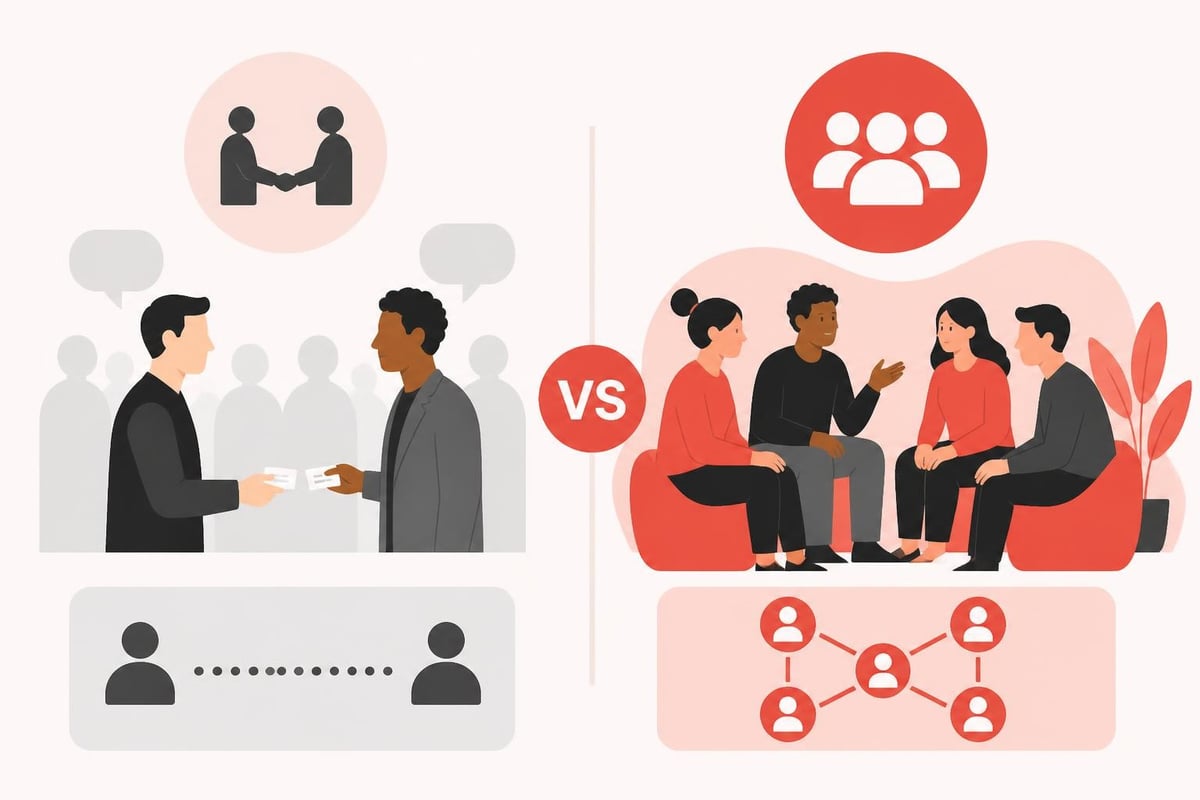
Many founders confuse networking with community building. Networking is transactional: you meet someone, exchange information, and move on. Community is relational and ongoing.
In genuine founder communities, relationships deepen over time. You share wins and losses, provide honest feedback, and build trust that extends beyond business transactions. This distinction matters because superficial connections rarely provide the depth of support needed during difficult pivots or challenging fundraising rounds.
Types of Founder Communities to Consider
Not all founder communities serve the same purpose. Understanding the different types helps you select the right fit for your current needs and startup stage.
Stage-Specific Communities
These groups focus on founders at similar points in their journey. Pre-seed founders face different challenges than Series A founders, and stage-specific communities recognize this reality.
Benefits of stage-specific groups:
- Relevant advice tailored to your current challenges
- Peer benchmarking against similar-stage companies
- Shared resources for stage-appropriate tools and strategies
- Network effects with investors focused on your stage
For Swiss founders just starting out, understanding the differences between co-founders and solo founders becomes crucial in these early-stage communities.
Industry-Vertical Communities
Vertical communities bring together founders in the same sector. Whether you're building in fintech, health tech, or SaaS, industry-specific groups offer specialized knowledge.
| Community Type | Primary Benefit | Best For |
|---|---|---|
| Stage-Specific | Relevant peer benchmarking | Founders needing context for current growth phase |
| Industry-Vertical | Domain expertise | Founders requiring sector-specific insights |
| Accountability Groups | Consistent progress | Founders struggling with execution discipline |
| Skill-Based | Targeted learning | Founders developing specific capabilities |
| Location-Based | Local connections | Founders building regional networks |
The value of industry focus becomes clear when you need specific regulatory guidance, sector trends, or customer acquisition strategies. Finding the right SaaS community, for example, requires aligning your goals with community strengths rather than just joining the largest group.
Accountability and Mastermind Groups
Smaller, tight-knit groups focused on mutual accountability provide different value than large communities. These typically involve 5-10 founders who meet regularly to share progress, challenges, and commitments.
The structure creates natural pressure to follow through on commitments. When you know you'll report to peers who understand the work required, you're more likely to complete difficult tasks.
Location-Based Communities
Despite digital connectivity, geography still matters. Local founder communities provide in-person connections, understanding of regional market dynamics, and access to local investors and talent pools.
For entrepreneurs in Switzerland, local startup ecosystems offer unique advantages including proximity to European markets, strong financial infrastructure, and a culture of innovation. Platforms like Swisspreneur create these location-specific connections while maintaining the quality and focus that makes communities valuable.
How to Evaluate Founder Communities Before Joining
With countless communities vying for your attention, selecting the right ones requires careful evaluation. Your time is limited, and spreading yourself across too many groups dilutes the value of each.
Response Quality Over Member Count
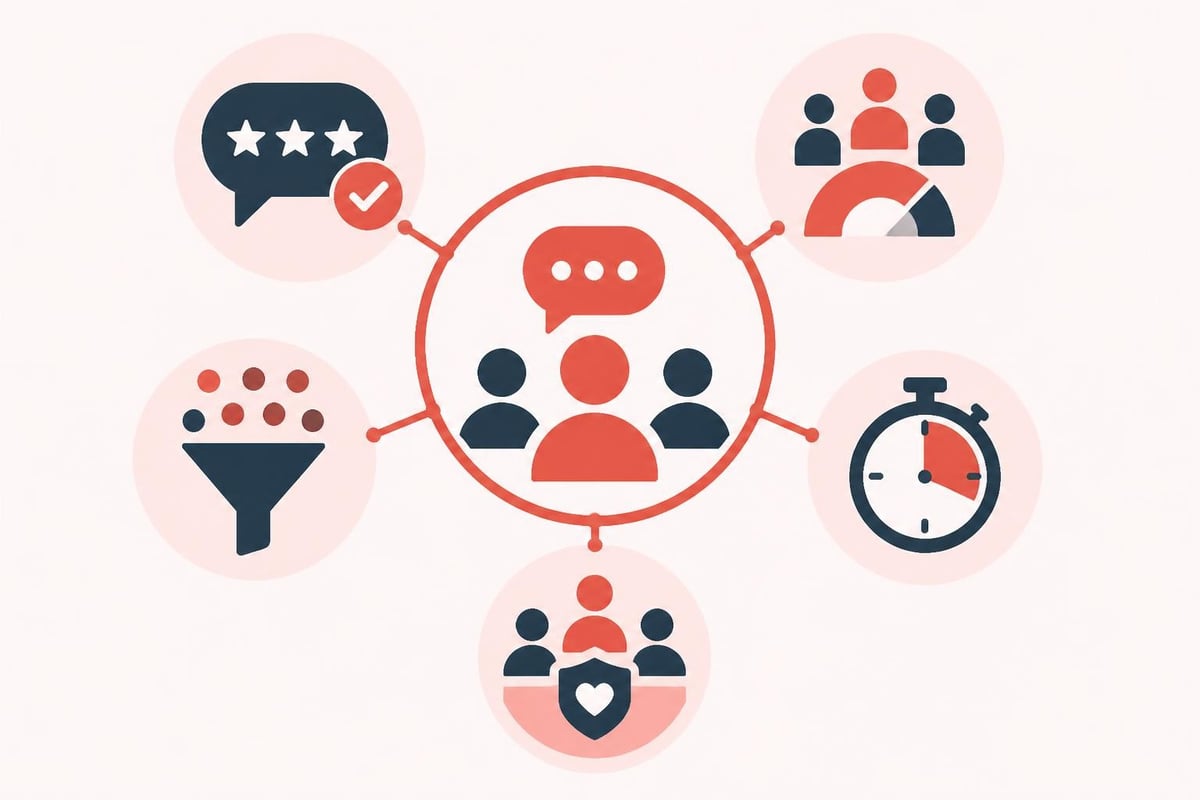
A community with 10,000 members might seem impressive, but if questions go unanswered or responses are generic, the size is meaningless. Look for communities where:
- Questions receive thoughtful, experience-based answers within 24 hours
- Members share specific tactics and learnings, not just platitudes
- Conversations go beyond surface-level advice
- Senior founders actively participate despite their success
The best founder communities in 2026 are evaluated based on response quality, operator density, and signal-to-noise ratio rather than sheer member count.
Operator Density Matters
Operator density refers to the percentage of members actively building companies versus passive observers, service providers, or aspiring founders. High operator density ensures the advice you receive comes from people currently facing similar challenges.
Look for communities where most members are:
- Currently running startups (not just former founders)
- Willing to share real metrics and experiences
- Active contributors rather than silent observers
- Focused on building rather than promoting services
Signal-to-Noise Ratio
High-value communities maintain strict standards about what gets shared. Self-promotion, low-quality content, and off-topic discussions dilute community value.
Before joining, observe the community's content for a week. Are posts substantive and helpful? Do moderators enforce quality standards? Is there more value creation than value extraction?
Building Value Within Founder Communities
Joining a community is just the first step. The real benefits come from active participation and strategic engagement.
The Give-First Mentality
The most successful community members contribute before asking. This isn't just good etiquette; it's strategic. By helping others first, you:
- Build credibility and trust
- Demonstrate your expertise
- Create reciprocity that makes others want to help you
- Develop deeper relationships beyond transactional exchanges
Start by answering questions in your area of expertise. Share relevant experiences, introduce members who should know each other, and provide honest feedback when asked.
Asking Better Questions
The quality of help you receive depends largely on how you ask. Vague questions like "How do I get customers?" generate vague answers. Specific questions with context generate actionable advice.
Effective question structure includes:
- Specific context about your situation
- What you've already tried
- Constraints or limitations you're working within
- The specific decision you're trying to make
- Why standard advice might not apply
For instance, asking about business models for startups becomes more valuable when you specify your industry, target market, and current traction.
Creating Deeper Connections
While community-wide discussions provide broad value, one-on-one relationships create the deepest impact. Use the community to identify potential advisors, collaborators, or accountability partners, then move those relationships beyond the platform.
Schedule regular calls with 3-5 founders whose judgment you trust. These relationships become your informal board of advisors, providing perspective during critical decisions.
Leveraging Communities for Specific Growth Challenges
Different startup phases require different types of community support. Strategic founders activate their networks for specific challenges rather than expecting generic ongoing value.
Fundraising and Investor Connections
When preparing to raise capital, founder communities provide multiple advantages. Members can introduce you to investors, review pitch decks, practice presentations, and share recent term sheet terms.
The fundraising process becomes less opaque when you can ask peers about their experiences with specific investors, typical timelines, and negotiation strategies.
More valuable than introductions is the honest feedback on your positioning and materials. Fellow founders will tell you hard truths that investors won't, helping you strengthen your approach before crucial meetings.
Product and Go-to-Market Strategy
Communities excel at pattern matching. When you're deciding between product directions or go-to-market strategies, other founders have likely faced similar decisions.
Key areas where community input accelerates decisions:
- Pricing strategy and packaging
- Channel selection and prioritization
- Product roadmap validation
- Feature prioritization frameworks
- Customer acquisition approaches
These discussions become particularly valuable when supplemented with specific metrics. Sharing your customer acquisition cost, conversion rates, or churn helps peers provide context-appropriate advice.
Hiring and Team Building
Building your early team might be the highest-stakes decision you make. Founder communities help by providing referrals, sharing hiring processes, and offering perspective on compensation and equity splits.
Understanding how to structure founders' agreements becomes clearer when you can review examples from companies at similar stages. Communities also help you avoid common pitfalls in equity allocation, vesting schedules, and role definition.
The Swiss Founder Community Advantage
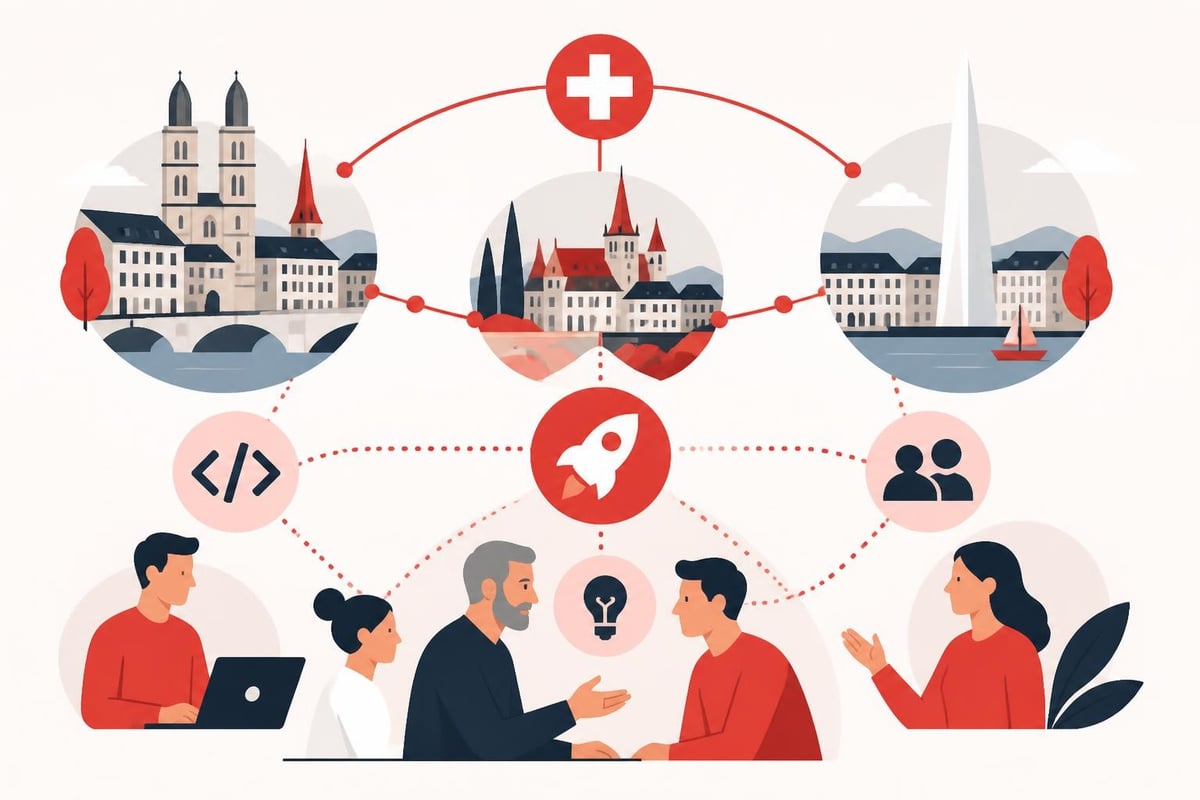
Switzerland's startup ecosystem has matured significantly over the past decade. The concentration of technical talent, access to capital, and proximity to European markets creates unique opportunities.
Local founder communities understand these specific advantages and challenges. Discussions about Swiss labor laws, accessing EU markets, or navigating local investment landscapes require regional expertise that international communities can't provide.
The entrepreneur groups emerging across Swiss cities create density that sparks innovation. When founders regularly interact at community events, serendipitous connections lead to partnerships, customer relationships, and knowledge sharing that wouldn't happen in purely digital spaces.
Learning from Swiss Success Stories
Swiss founders have built remarkable companies across sectors. Success stories from Swiss entrepreneurs provide templates and inspiration, but direct access to these founders through communities offers something more valuable: the ability to ask specific questions about their journey.
Understanding how founders balance raising kids and growing startups or hearing candid discussions about pivots and failures provides learning you can't find in polished success stories.
Building Your Community Participation Strategy
Effective community engagement requires intention. Random participation generates random results. Strategic founders approach community involvement with clear goals and boundaries.
Setting Clear Community Objectives
Before joining any community, define what you need. Are you seeking:
- Specific technical expertise in your domain
- Regular accountability to maintain momentum
- Introductions to potential investors or customers
- Emotional support during difficult periods
- Hiring pipeline and talent connections
Your objectives determine which communities make sense and how you should participate. A guide to finding the right founder community emphasizes matching community type to your specific startup stage and needs.
Time Management and Community Boundaries
Community involvement can easily consume excessive time. Successful founders set clear boundaries:
- Designate specific times for community engagement rather than constant monitoring
- Limit active communities to 2-3 where you participate deeply
- Define what warrants interruption versus what waits for designated time blocks
- Measure value received against time invested quarterly
If a community stops providing value proportional to your investment, exit gracefully and reallocate that time.
Documenting and Sharing Learnings
As you receive advice and implement strategies, document what works. Your learnings become valuable contributions back to the community. This creates a virtuous cycle where sharing your experiences helps others while solidifying your own understanding.
Consider maintaining a private log of key insights from community interactions. Over time, patterns emerge that inform your decision-making framework.
The Future of Founder Communities
The evolution of founder communities continues accelerating. Several trends are reshaping how these networks function and deliver value.
Increased Specialization
Generic founder communities are giving way to highly specialized groups. Rather than broad entrepreneurship networks, we're seeing communities focused on:
- Specific business models (SaaS, marketplace, hardware)
- Revenue stages (pre-revenue, $1M ARR, $10M ARR)
- Founder backgrounds (technical, non-technical, second-time founders)
- Market focus (B2B, B2C, enterprise)
This specialization increases relevance but requires founders to participate in multiple communities for comprehensive support.
Quality-First Curation
The best communities are becoming harder to join. Application processes, referrals, and active contribution requirements filter for quality. While this creates barriers, it also ensures that communities maintain high value for existing members.
According to research on building founder communities from zero, defining clear purpose and carefully recruiting initial members determines long-term community health.
Integration with Other Resources
Forward-thinking communities are integrating with complementary resources. Rather than just discussion forums, they're connecting members to tools for entrepreneurs, curated content, expert workshops, and structured programs.
This evolution transforms communities from pure networking into comprehensive support systems. The integration of startup business coaching with peer communities creates hybrid models that combine expert guidance with peer support.
Measuring Community ROI
Like any investment, community participation should generate measurable returns. While not everything is quantifiable, successful founders track community value in several ways.
| Metric Category | Specific Measures | Evaluation Frequency |
|---|---|---|
| Connections | Quality introductions made, investor meetings secured | Monthly |
| Knowledge | Specific problems solved, decisions improved | Quarterly |
| Accountability | Goals achieved due to community commitment | Monthly |
| Business Impact | Revenue influenced, costs saved, hiring improved | Quarterly |
| Time Investment | Hours spent versus value created | Monthly |
Regular evaluation helps you optimize community participation. If specific communities consistently provide value, increase engagement. If others drain time without returns, reduce involvement or exit entirely.
Intangible Benefits Matter Too
Beyond measurable metrics, communities provide intangible value that's harder to quantify but equally important:
- Reduced sense of isolation and stress
- Confidence from knowing you're not alone in challenges
- Validation of your approach or early warning of problems
- Exposure to different thinking styles and approaches
- Sense of belonging in the entrepreneurial journey
These emotional and psychological benefits contribute to founder wellbeing, which directly impacts decision quality and persistence through difficult periods.
Creating Your Own Community Initiatives
As you progress in your journey, you may identify gaps in existing communities. Creating your own focused group can provide exactly the support you need while building valuable relationships.
Small accountability groups of 5-8 founders can be more valuable than large networks. These intimate groups meet regularly (weekly or biweekly), share honest updates, and provide focused support.
Starting a small founder group:
- Identify 4-7 founders at similar stages with complementary expertise
- Set clear expectations for time commitment and participation
- Establish regular meeting cadence and format
- Define confidentiality and trust boundaries
- Create accountability mechanisms that work for everyone
Even within larger communities, creating subgroups focused on specific topics or challenges enhances value. Whether it's a cohort working through launching an online business or founders tackling similar technical challenges, smaller focused groups drive action.
Founder communities provide the support, knowledge, and accountability that transform the isolating journey of entrepreneurship into a collaborative adventure. By strategically selecting communities aligned with your stage and needs, actively contributing value, and building deeper one-on-one relationships, you accelerate your startup's growth while reducing the emotional burden of building alone. Swisspreneur connects Swiss founders with the resources, events, and peer networks that make this possible, offering everything from candid podcast conversations with successful entrepreneurs to regular community events where meaningful relationships form naturally.