

Build a Company in Switzerland: Complete 2026 Guide
Switzerland continues to rank among the world's most attractive destinations for entrepreneurs and business owners. The country's political stability, robust legal framework, and favorable tax environment make it an ideal location to build a company in Switzerland. Whether you're a local entrepreneur or an international founder looking to establish a presence in the heart of Europe, understanding the Swiss business landscape is essential for long-term success. This guide walks you through everything from choosing your legal structure to navigating registration requirements and optimizing your setup for growth.
Choosing the Right Legal Structure
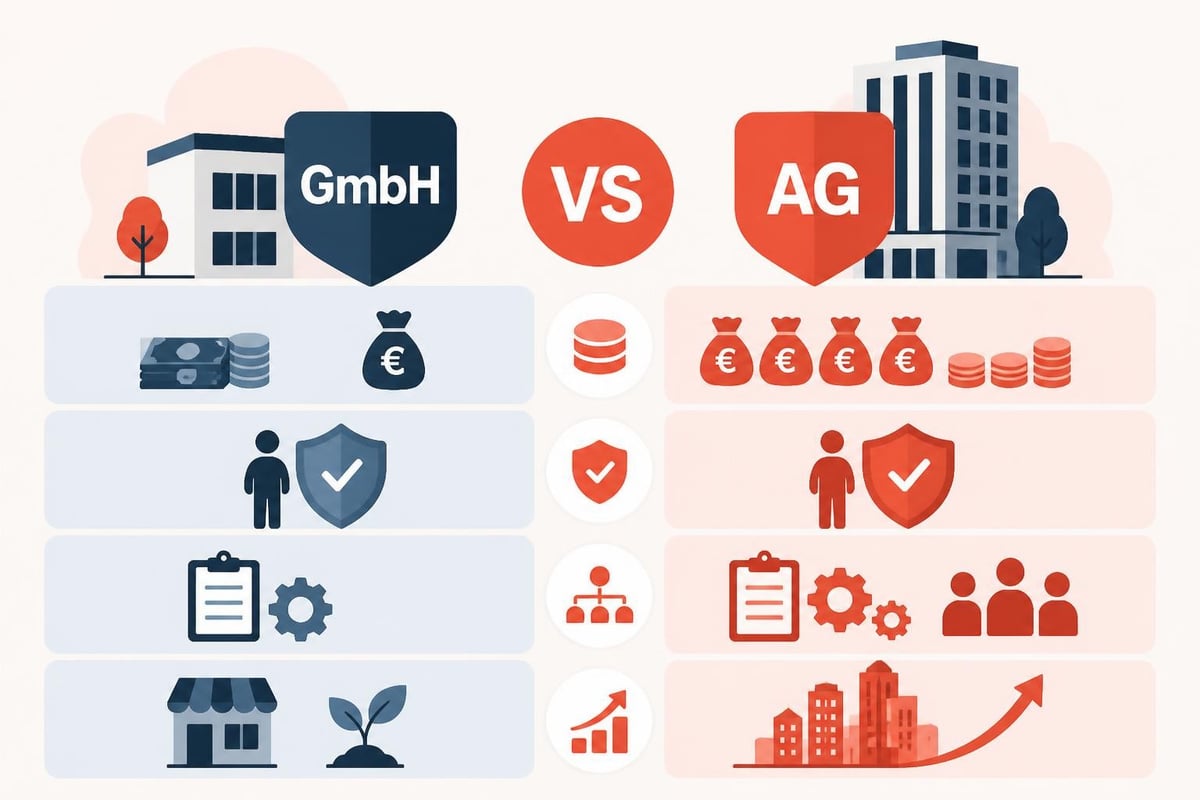
When you build a company in Switzerland, your first major decision involves selecting the appropriate legal entity. This choice impacts everything from liability protection to tax obligations and capital requirements.
Limited Liability Company (GmbH/SARL)
The GmbH (Gesellschaft mit beschränkter Haftung) remains one of the most popular choices for small to medium-sized businesses. This structure offers:
- Limited liability protection for shareholders
- Minimum capital requirement of CHF 20,000
- Flexible management structures
- Tax efficiency for owner-operated businesses
Shareholders in a GmbH are only liable up to their capital contribution, making it an attractive option for entrepreneurs who want to protect personal assets. The administrative burden is moderate, and the structure allows for straightforward profit distribution.
Stock Corporation (AG/SA)
For startups planning to scale quickly or raise venture capital, the AG (Aktiengesellschaft) offers distinct advantages. This structure requires a minimum share capital of CHF 100,000, with at least CHF 50,000 paid in at formation.
Key benefits include:
- Enhanced credibility with investors and partners
- Easier transfer of shares
- Suitability for employee stock option plans
- Better positioning for eventual IPO or acquisition
Many Swiss tech startups featured in Swisspreneur's podcast conversations chose the AG structure from day one to facilitate future funding rounds.
Sole Proprietorship
For individual entrepreneurs testing business ideas, sole proprietorship offers the simplest entry point. However, this structure provides no liability protection, meaning personal assets remain at risk. It works well for consultants, freelancers, and service providers with minimal overhead, but most ambitious founders quickly outgrow this option as they scale.
Registration Process and Requirements
The process to build a company in Switzerland involves several mandatory steps, each with specific documentation and timeline considerations. The official registration guide provides comprehensive details, but here's what you need to know in practice.
Preparing Your Articles of Association
Your company's articles of association form the constitutional foundation. According to Swiss legal requirements for articles of association, you must include:
| Required Element | Description |
|---|---|
| Company name | Must be unique and include legal form (GmbH or AG) |
| Registered office | Must be in Switzerland with a valid address |
| Business purpose | Clear description of planned activities |
| Share capital | Amount and number of shares |
| Governance structure | Board composition and signing authority |
The 2023 corporate law reforms introduced greater flexibility in certain areas, particularly around capital contributions and governance provisions. Working with a specialized lawyer ensures your articles optimize for both compliance and operational flexibility.
Notarization and Capital Deposit
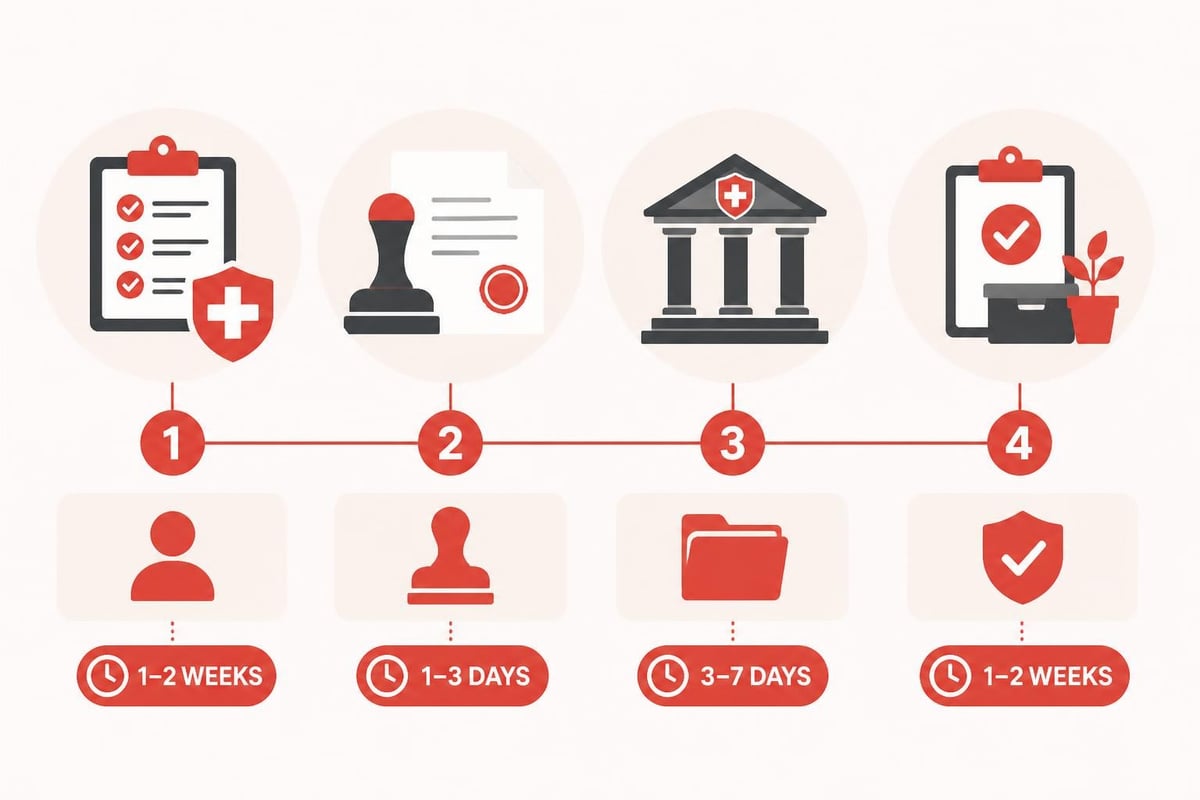
For both GmbH and AG structures, you'll need notarized foundation documents. The process typically unfolds as follows:
- Draft articles of association with legal counsel
- Open a capital deposit account at a Swiss bank
- Attend notarization appointment with all founders
- Receive notarized documents for commercial registry filing
Banks require proof of identity, business plan details, and source of funds documentation. This banking relationship often becomes your primary business account once registration completes.
Commercial Registry Entry
Filing with your cantonal commercial registry office represents the final official step. Processing times vary by canton but typically take 5-10 business days. You'll need:
- Notarized foundation documents
- Confirmation of capital deposit
- Proof of registered office address
- Board member identification documents
- Signature specimen for authorized signatories
Once registered, your company officially exists as a legal entity and receives a unique identification number (UID).
Understanding Swiss Tax Benefits
Switzerland's tax system offers significant advantages when you build a company in Switzerland, but it operates on three distinct levels: federal, cantonal, and municipal. Understanding this structure helps you optimize your location and corporate setup.
Corporate Tax Rates Across Cantons
The 2026 corporate tax landscape shows continued competitiveness following recent reforms. Effective corporate tax rates vary substantially by canton:
Competitive cantonal rates:
- Zug: approximately 11.85%
- Lucerne: approximately 12.15%
- Appenzell Innerrhoden: approximately 12.48%
- Nidwalden: approximately 12.65%
Zurich and Geneva, while offering higher rates (19-21%), provide other benefits including larger talent pools, established startup ecosystems, and international connectivity. Many founders weigh tax savings against ecosystem advantages when choosing their company's location.
Value Added Tax (VAT) Registration
Companies with annual turnover exceeding CHF 100,000 must register for VAT. The standard rate in 2026 remains 8.1%, with reduced rates for certain goods and services. Voluntary registration below the threshold can make sense if you purchase significant capital equipment or services, as you can reclaim input VAT.
Research and Development Incentives
Switzerland offers attractive R&D tax incentives, allowing companies to claim additional deductions on qualifying innovation expenses. This "patent box" regime taxes income from intellectual property at reduced rates, particularly beneficial for tech startups and pharmaceutical companies.
Permits and Compliance for Foreign Founders
Non-Swiss nationals face additional considerations when they build a company in Switzerland. The process depends heavily on your citizenship and whether you'll be employed by your own company.
Work Permits for EU/EFTA Citizens
Citizens from EU/EFTA countries benefit from freedom of movement agreements. You can establish residency relatively easily by:
- Registering with your local municipality
- Demonstrating financial resources or business viability
- Obtaining health insurance
- Receiving a residence permit (typically B permit)
The official guide on working in Switzerland outlines specific requirements based on nationality.
Non-EU Founders
Third-country nationals face more stringent requirements. You'll typically need to demonstrate:
- Significant economic benefit to Switzerland
- Substantial capital investment (often CHF 250,000+)
- Job creation for Swiss/EU workers
- Unique business proposition not readily available locally
Cantons have discretion in granting work permits, and some regions show more openness to foreign entrepreneurs than others. Geneva, Zurich, and Zug generally maintain established processes for startup founders.
Setting Up Banking and Insurance
Opening a corporate bank account represents a critical early step. Swiss banks have become increasingly selective, requiring comprehensive documentation about business activities, ownership structure, and expected transaction patterns.
Banking Documentation Requirements
Prepare these materials:
- Commercial registry extract
- Articles of association
- Business plan and financial projections
- Ultimate beneficial owner declarations
- Source of funds documentation
- Personal identification for all authorized signatories
Some startups face challenges with traditional banks and turn to digital banking alternatives or specialized startup-friendly institutions. Building relationships through your network can ease this process considerably.
Mandatory Insurance Coverage
Switzerland requires specific insurance coverage types:
| Insurance Type | Requirement Level | Purpose |
|---|---|---|
| Occupational pension (BVG/LPP) | Mandatory for employees earning >CHF 22,050/year | Retirement savings |
| Accident insurance (UVG/LAA) | Mandatory for all employees | Work-related accidents |
| Social security (AHV/AVS) | Mandatory for all workers | National pension system |
| Daily sickness benefits | Recommended | Income protection during illness |
Even if you're the sole employee initially, you must contribute to social security systems. Budgeting approximately 13-15% of gross salary for mandatory employer contributions provides a realistic planning baseline.
Governance and Reporting Standards
Understanding corporate governance requirements helps you build a company in Switzerland that maintains compliance while focusing on growth. The 2026 corporate governance framework introduces enhanced transparency requirements, particularly around beneficial ownership.
Board Composition Rules
AG requirements:
- Minimum one board member (must be Swiss resident)
- Majority of board members must have Swiss residence
- At least one signatory must be Swiss resident
GmbH requirements:
- Minimum one managing director
- At least one managing director must be Swiss resident
- More flexible than AG structure
Many international founders bring on a local trusted advisor or professional director to satisfy residency requirements, ensuring compliance while maintaining operational control.
Annual Obligations
Swiss companies must fulfill several ongoing requirements. Creating a founder's agreement early helps establish protocols for decision-making and responsibilities.
Annual requirements include:
- Preparing financial statements according to Swiss GAAP
- Holding an annual general meeting
- Filing tax returns (federal, cantonal, municipal)
- Updating commercial registry for material changes
- Maintaining statutory records and minutes
Small companies benefit from simplified accounting rules, but once you exceed two of three thresholds (CHF 20M revenue, CHF 20M balance sheet, 50 FTE employees), ordinary audit requirements apply.

Leveraging Switzerland's Startup Ecosystem
Beyond legal and administrative considerations, successful founders tap into Switzerland's vibrant entrepreneurial community when they build a company in Switzerland. The ecosystem has matured significantly, offering resources that accelerate growth.
Accessing Knowledge Networks
Switzerland hosts numerous entrepreneur support platforms, with Swisspreneur leading the charge in connecting founders with experienced business leaders. These networks provide invaluable resources:
- Peer learning through shared challenges
- Mentor connections with successful exits
- Investor introductions for fundraising
- Talent networks for hiring
Entrepreneurs who actively engage with the community consistently outperform those who remain isolated. Regular participation in startup meetups builds relationships that lead to partnerships, customers, and funding.
Funding Landscape
Switzerland's funding environment spans various stages and sources. For early-stage fundraising, options include:
- Government grants (Innosuisse for innovation projects)
- Accelerator programs (Kickstart, MassChallenge Switzerland)
- Angel investors through syndicates and networks
- Venture capital for scalable tech businesses
Understanding different business models for startups helps you identify the most appropriate funding path. Not every business suits venture capital, and bootstrapping remains a viable strategy for many Swiss entrepreneurs.
Talent Acquisition Strategies
Switzerland's multilingual, highly educated workforce provides competitive advantages, but talent competition remains intense. Successful companies focus on:
- Compelling mission beyond compensation
- Competitive equity packages (especially for AG structures)
- Flexible work arrangements increasingly expected post-2024
- Professional development opportunities
- International team culture leveraging Switzerland's diversity
Many entrepreneur success stories credit their teams as the decisive factor in achieving product-market fit and sustainable growth.
Common Pitfalls to Avoid
Even experienced founders make mistakes when they build a company in Switzerland for the first time. Learning from others' experiences prevents costly errors.
Underestimating Administrative Costs
Swiss operational costs extend beyond obvious categories. Realistic budgeting accounts for:
Hidden costs to plan for:
- Mandatory audits once size thresholds trigger
- Professional directors or compliance officers
- Commercial registry fees for structure changes
- Legal counsel for employment contracts
- Accounting and tax preparation services
Budget 15-25% more than initial estimates for professional services, particularly in your first year navigating unfamiliar systems.
Neglecting Intellectual Property Protection
Switzerland's strong IP protections only help if you proactively secure them. Filing trademarks, patents, and establishing proper IP assignment agreements with founders and employees prevents future disputes. Many startups rush through formation without addressing IP ownership, creating complications during fundraising or exit discussions.
Choosing Location Purely for Tax
While cantonal tax differences matter, optimizing solely for the lowest rate often backfires. Consider:
- Access to relevant talent pools
- Proximity to customers and partners
- Quality of life for team members
- Infrastructure and connectivity
- Ecosystem maturity in your industry
A company in a higher-tax canton with better ecosystem support often outperforms one in a low-tax canton without relevant networks or talent.
Strategic Considerations for Growth
Planning beyond formation helps you build a company in Switzerland positioned for sustainable scaling. Several strategic decisions made early create compounding advantages over time.
Structuring for International Expansion
Many Swiss startups eventually expand beyond borders. Structuring considerations include:
| Decision Point | Early-Stage Approach | Scale-Stage Implications |
|---|---|---|
| Holding company structure | Single Swiss entity | Holding company with subsidiaries |
| IP ownership | Direct company ownership | IP holding entity in favorable jurisdiction |
| Employment contracts | Swiss law for all employees | Local entities in major markets |
| Revenue recognition | All through Swiss entity | Separate entities per region |
Discussing international plans with specialized counsel during formation prevents expensive restructuring later. The guide on starting a business in Switzerland provides additional context for positioning your venture strategically.
Building Advisory Relationships
Strong advisors accelerate progress significantly. Identify and cultivate relationships with:
- Experienced lawyer specializing in startups
- Accountant or tax advisor understanding your industry
- Industry mentors who've navigated similar paths
- Potential board members bringing complementary expertise
These relationships provide guidance during critical junctures, from fundraising negotiations to acquisition discussions. Many entrepreneurs discover finding the right co-founder becomes easier through advisor introductions.
Preparing for Fundraising
If you plan to raise external capital, several formation decisions impact attractiveness to investors. Consider implementing:
- Vesting schedules for founder shares
- Employee option pool (typically 10-15% of fully diluted equity)
- Board structure allowing investor representation
- Tag-along and drag-along provisions
- Liquidation preferences framework
Professional investors expect these standard terms. Implementing them proactively demonstrates sophistication and accelerates due diligence processes.
Practical Timeline and Cost Expectations
Understanding realistic timeframes and budgets helps you build a company in Switzerland with appropriate planning. Actual results vary based on complexity and canton, but these benchmarks provide useful guidance.
Formation Timeline
Typical timeline breakdown:
- Week 1-2: Business plan refinement, legal structure decision
- Week 3-4: Draft articles of association, identify registered office
- Week 5-6: Banking relationship establishment, capital deposit
- Week 7: Notarization appointment and execution
- Week 8-9: Commercial registry filing and approval
- Week 10+: VAT registration, insurance setup, bank account activation
Expedited timelines of 4-6 weeks are possible with preparation and responsive service providers, while complex structures or regulatory challenges can extend to 12+ weeks.
Budget Considerations
Estimated formation costs for AG structure:
- Notary fees: CHF 2,000-3,000
- Legal counsel: CHF 3,000-8,000
- Commercial registry: CHF 600-800
- Initial capital: CHF 50,000 (minimum paid-in)
- Banking fees: CHF 200-500
- Translation/publication: CHF 300-500
Total foundation costs: CHF 6,000-13,000 plus required capital. GmbH formation typically costs 20-30% less given lower capital requirements and simpler structure.
Beyond formation, budget for ongoing operational costs including accounting (CHF 3,000-10,000 annually), legal counsel (CHF 2,000-5,000 annually), and mandatory audits if applicable (CHF 5,000-15,000 annually).
Making Your Swiss Company Vision Reality
The decision to build a company in Switzerland represents a significant commitment, but the country's supportive environment for entrepreneurs continues attracting founders from around the world. Success requires careful planning, expert guidance, and connection to the broader startup community.
Following the comprehensive steps outlined by Swiss authorities ensures compliance, while tapping into experienced founder networks provides the practical wisdom that accelerates your journey. Every entrepreneur faces unique challenges, but Switzerland's combination of legal certainty, economic stability, and innovation culture creates an environment where ambitious visions become reality.
The most successful founders balance meticulous attention to administrative requirements with aggressive pursuit of product-market fit and customer acquisition. Your legal structure and compliance framework should enable growth, not constrain it. Invest time in proper setup, then shift focus to building products customers love and teams that can deliver them.
Building your company in Switzerland opens doors to one of the world's most supportive entrepreneurial ecosystems, but navigating formation requirements and strategic decisions requires both knowledge and community. Whether you're selecting your legal structure, planning for international growth, or preparing to raise capital, connecting with experienced founders who've walked this path accelerates your progress. Swisspreneur provides the resources, connections, and insights Swiss entrepreneurs need to transform their visions into thriving businesses through candid conversations, practical masterclasses, and a vibrant community of innovators building the future.